
Table of Contents
TL;DR
- NYC has way stricter unpaid internship laws than federal standards - most legit positions need academic credit and actual structured learning
- Non-profits offer more unpaid opportunities than for-profit companies, which face heavy restrictions on unpaid work
- Start networking early through university career services, alumni connections, and industry associations to access the hidden job market
- Apply for summer internships between January-March, and fall/spring positions one semester ahead
- Red flags include tons of admin work, no supervision, and basically replacing regular employee duties
- Get everything in writing with clear learning objectives and educational focus
- Report violations to NYC Department of Consumer and Worker Protection - you might get back pay
Here's the deal with NYC's internship scene: it's complicated, competitive, and honestly, most companies are doing it wrong. According to employment law experts, "Most unpaid internships are illegal" - which should be a wake-up call for anyone trying to land meaningful work experience in one of the most cutthroat job markets in the country. The big question everyone's asking - are unpaid internships legal in NYC - isn't just academic. It's about protecting yourself from exploitation while actually advancing your career.
Understanding NYC's Unpaid Internship Legal Framework
Look, NYC doesn't mess around when it comes to unpaid work - and honestly, that's a good thing for you. The city has piled extra protections on top of federal requirements that completely change how internships work here.
The federal government uses something called the Primary Beneficiary Test, which basically asks: "Who's getting more out of this - you or the company?" But NYC takes it way further, requiring actual concrete educational structures that go beyond federal minimums.

Federal Standards vs. NYC's Extra Rules
Here's the difference: Federal law asks "Who benefits more from this arrangement?" NYC asks "Can you actually prove this is educational?"
The Primary Beneficiary Test looks at stuff like whether you're getting academic credit, if the internship connects to your coursework, and whether you're replacing regular employees. These are decent starting points, but NYC's Fair Work Week Law adds real teeth to these requirements.
Here's where it gets interesting - NYC requires employers to show they have active educational programming. You can't just shadow someone and call it learning. There needs to be structured mentorship, regular feedback sessions, and actual measurable skill development.
|
Federal Requirements (FLSA) |
NYC's Extra Standards |
|---|---|
|
Primary Beneficiary Test |
Must have educational components |
|
Seven-factor analysis |
Structured mentorship required |
|
Flexible guidelines |
Concrete supervision standards |
|
Academic credit preferred |
Academic credit basically essential |
|
General educational benefit |
Measurable skill development |
Academic Credit: Your Legal Shield
Look, here's the thing about academic credit - it's not just some bureaucratic hoop to jump through. It's basically your get-out-of-jail-free card that makes everything legit.
Think about it this way: when your school is involved, suddenly there are three parties making sure you're actually learning something instead of just being someone's personal assistant. Your professor has to check in on you, the company has to prove they're teaching you real skills, and you get actual course credit for your time.
I've seen too many students try to skip this step because they think it's extra paperwork. Don't be that person. Companies that push back on the academic credit requirement? That's your first red flag right there.
When students are juggling internship requirements with academic credit, the last thing they need is housing stress. That's why checking out your housing options and application process early can save you from scrambling later when you should be focused on nailing that internship.
Here's what happened to Sarah, a junior at NYU: She landed this marketing gig at a Brooklyn nonprofit through her career center. Yeah, she had to write weekly reflection papers and meet with both her campus advisor and workplace supervisor, but guess what? She actually learned digital marketing and grant writing that directly tied into her classes. Plus, when the nonprofit tried to have her doing random admin work, her school advisor shut that down real quick.
Industry-Specific Rules You Need to Know
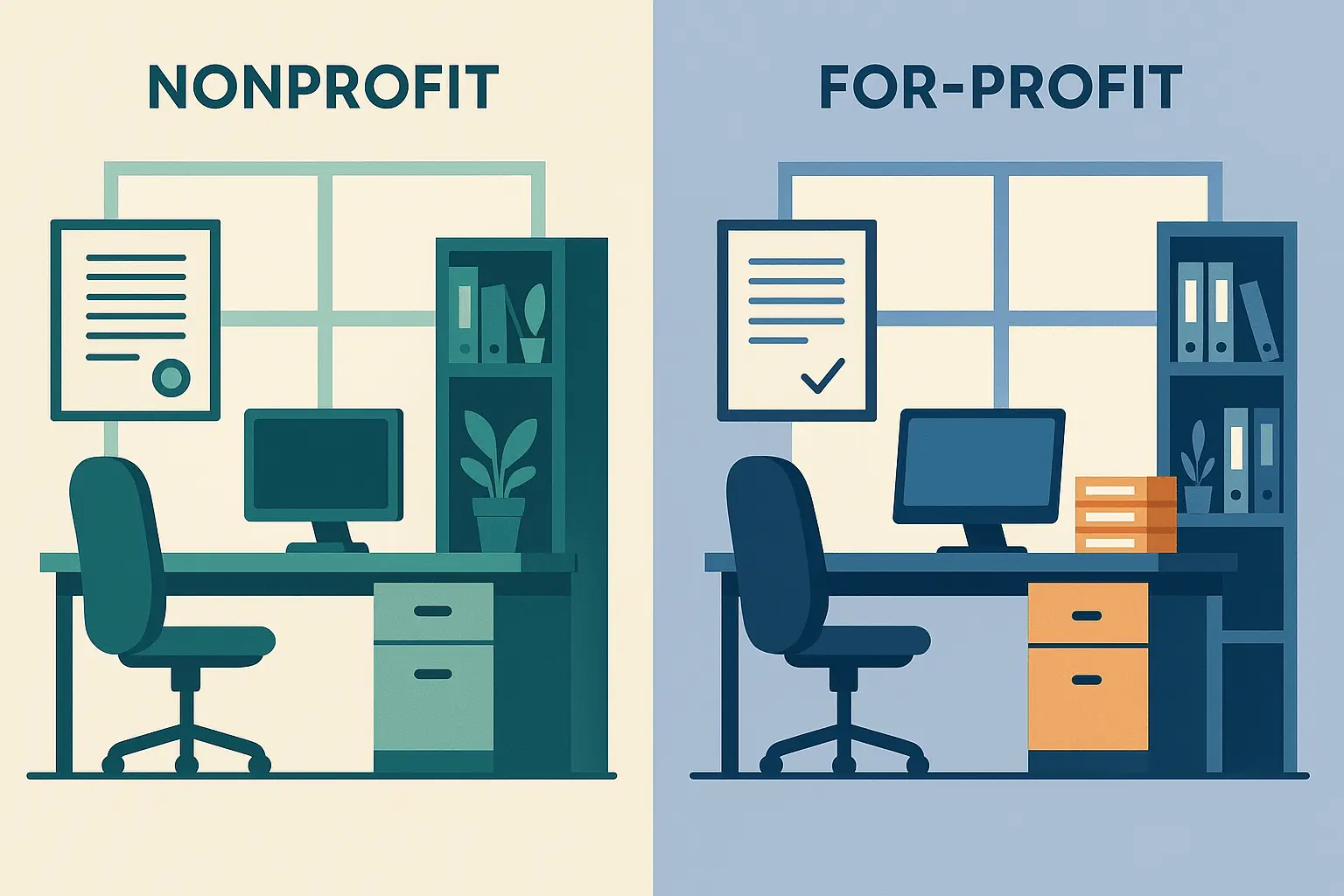
Okay, so here's where it gets interesting. Non-profits basically get a hall pass on a lot of these rules. Working for a community organization or advocacy group? The "public good" angle covers a lot of ground.
But for-profit companies? They're under a microscope. Every single task you do needs to have some educational justification. It's honestly kind of hilarious watching companies try to explain how organizing their supply closet is "valuable professional development."
This is why you'll see way more unpaid opportunities at non-profits. They're not trying to squeeze free labor out of you - they genuinely can't afford to pay interns, but they can offer real experience in social work, public policy, or community organizing.
Documentation That Protects You
I cannot stress this enough - get everything in writing. I don't care if your supervisor seems super nice and trustworthy. People leave, companies change, and your verbal agreement means nothing if things go sideways.
Your internship agreement should read less like a job description and more like a college syllabus. Learning objectives, who's supervising you, how you'll be evaluated - all of it needs to be spelled out upfront.
Your Internship Agreement Should Include:
- What specific skills you'll actually learn (not just "gain experience")
- Who's mentoring you and how often you'll meet
- How they'll evaluate your progress
- Exactly how long you'll be there and how many hours per week
- Your academic credit details
- What to do if something goes wrong
- A clear statement that this is educational, not just free work
How to Actually Get a Good Internship in NYC
Alright, let's get real about landing internships in this city. Sending out 200 generic applications and crossing your fingers? That's not going to cut it. NYC's job market rewards people who actually put in the effort to build relationships.
The good news? You're in one of the best cities in the world for networking. The bad news? So is everyone else.
Check out this success story that proves persistence pays off: "The intern who never gave up: Building a career inside Brooklyn's courthouses" shows how Xavier Carr turned unpaid courthouse internships into a senior counsel position at NYC's Office of Technology and Innovation. And get this - he failed the bar exam six times. Talk about not giving up.

Start Networking Before You Actually Need It
Here's what nobody tells you: start building your network sophomore year, not when you're desperately hunting for internships senior year. NYC professionals are actually pretty approachable if you're not obviously just hitting them up for favors.
Your career services office isn't just there to proofread your resume. They've got connections with hundreds of NYC employers and inside info on which companies are actually good to interns versus which ones are just looking for free coffee runners.
Industry associations might seem boring, but hear me out - that $25-50 student membership gets you access to networking events where you can actually meet people who make hiring decisions. Way better than cold-emailing strangers on LinkedIn.
And don't sleep on your alumni network. So many graduates stick around NYC after college, which means there's probably someone from your school working at your dream company right now. A casual coffee chat can lead to introductions that completely bypass the normal application process.
If you're serious about networking, location matters. Students at places like The Central Park Manhattan House don't have to stress about long commutes to networking events - you can actually show up to those 6 PM industry mixers without being exhausted from traveling across the city.
Real talk from Marcus at Columbia: This guy joined the New York Press Club for 40 bucks as a sophomore. At one of their monthly events, he met a Wall Street Journal reporter who introduced him to an editor at a financial startup. That connection got him a summer internship that wasn't even posted publicly yet. Sometimes it really is about who you know.
Timing Is Everything (Seriously)
Listen up, because this could save you months of frustration. NYC internships operate on pretty rigid schedules, and if you miss the window, you're basically screwed until the next cycle.
Summer internships? Applications open in January and close by March. I know it seems crazy early, but remember - you're competing with students who started prepping in the fall.
Fall and spring positions recruit one full semester ahead. Want a fall internship? Start applying in March. Spring position? Get your stuff together by October.
Here's an insider tip: reach out to companies before applications officially open. Hitting up someone in December for a summer position can get you on their radar before the flood of applications hits.
|
When You Want to Work |
When to Apply |
Application Deadlines |
Pro Move |
|---|---|---|---|
|
Summer |
January - March |
Most close March 15 |
Start networking in December |
|
Fall |
March - April |
Usually April 30 |
Connect with recruiters in February |
|
Spring |
September - October |
Typically October 31 |
Do your research in August |
|
Whenever |
Year-round |
Varies |
Non-profits are more flexible |
If You're Going for Creative Industries
NYC's creative scene - advertising, media, fashion, publishing - has its own rules. Your portfolio needs to show you actually understand this city's vibe, not just that you can use Photoshop.
This isn't just about technical skills. You need to prove you get NYC's cultural dynamics, the diversity, the fast pace, the way trends move here. Generic work that could be from anywhere isn't going to cut it.
For advertising and marketing, include stuff that reflects how diverse and urban this city is. Fashion portfolios should show you understand both street style and high fashion. Media work needs to demonstrate you get NYC's role as a global information hub.
Creative types often find inspiration in their neighborhoods. If you're pursuing creative internships, living somewhere with cultural richness like The Apollo House in Harlem means you're surrounded by the artistic communities that inform great creative work.
Quality beats quantity every single time. Three amazing pieces that show real thinking and cultural awareness will destroy ten generic samples.

How to Spot Sketchy "Internships" and Protect Yourself
Not every internship posting is legit. Some companies are basically running scams, using "internship programs" to get free labor while completely ignoring employment laws.
Learning to spot these situations isn't just about avoiding exploitation - it's about not wasting your time on experiences that won't actually help your career. The U.S. Department of Labor has gotten stricter about this stuff, using "a flexible seven-part primary beneficiary test, updated from a more rigid six-point test in 2018" to make sure employers prove interns are actually benefiting from the arrangement.

When "Learning" Is Actually Just Free Labor
If your day consists mainly of filing, data entry, coffee runs, or other mind-numbing admin work without any educational context, you're getting screwed.
Real internships have structure. You should be meeting regularly with supervisors, seeing different parts of the business, working on projects that actually teach you skills. If you're just doing busy work that any temp could handle, that's not an internship - that's a job they should be paying someone to do.
Here's the big test: if your work is directly replacing what a paid employee would normally do, that's illegal. You're not there to fill staffing gaps because they're too cheap to hire someone.
No supervision is another huge red flag. If you're just working alone without regular guidance or feedback, where's the educational component? Legitimate internships require actual mentorship and structured learning.
Major Red Flags:
- Your tasks are mostly administrative busywork (filing, data entry, making copies)
- Nobody's actually supervising or mentoring you
- You're doing work that obviously should be a paid position
- There's no structured learning or skill development happening
- They want you working crazy hours without academic credit
- They keep dangling future paid positions as motivation
- Everything's verbal - no written agreement about what you're supposed to be learning
What to Do When Things Go Wrong
If you end up in a sketchy situation, you're not powerless. NYC actually has your back here.
The NYC Department of Consumer and Worker Protection is where you start. They investigate unpaid internship violations and can order companies to pay you back wages. The complaint process is pretty straightforward and you don't need a lawyer.
For bigger cases or repeat offenders, the State Attorney General's office has more resources to go after companies that are systematically exploiting interns.
Document everything. Keep track of what you're doing every day, how many hours you're working, any emails or messages about your role. If you need to file a complaint or go after back pay, this documentation is gold.
Jessica's story: She thought she landed a "marketing internship" at a Manhattan startup. Turned out to be full-time data entry and social media posting - basically replacing someone who quit. After documenting everything for two weeks, she filed a complaint with the city. The investigation got her $3,200 in back pay at minimum wage rates and forced the company to fix their internship program.
Getting the Most Out of Your NYC Internship
Once you've landed a legit internship, your job is to squeeze every bit of value out of the experience. NYC gives you advantages that interns in other cities just don't have - the concentration of industry leaders, constant networking events, professional development opportunities everywhere you look.
Take Control of Your Own Learning
Don't just show up and wait for someone to teach you stuff. Come prepared with specific goals and ask for regular check-ins.
Your weekly meetings with your supervisor shouldn't just be task updates. Use that time to get feedback, ask for more challenging work, and pick their brain about industry insights.
Keep a learning journal throughout your internship. Track new skills, industry knowledge, professional connections - this stuff becomes gold when you're interviewing for your next opportunity.
Weekly Check-In Template:
- What did I actually learn last week?
- What challenges am I facing and how can I improve?
- What feedback do you have on my work?
- What new skills should I focus on developing?
- What projects are coming up that I could contribute to?
- What industry trends should I be aware of?
- Are there networking opportunities I should know about?
Take Advantage of NYC's Professional Scene
NYC's event calendar is insane. Industry conferences, workshops, panel discussions, networking events - there's literally something happening every night across every sector.
Here's a pro tip: go to events outside your immediate industry. NYC's business world is super interconnected, so skills and connections from adjacent fields often end up being valuable. Marketing intern? Hit up some fintech events. Fashion intern? Check out retail technology conferences.
A lot of these events offer student discounts or free admission for early-career people. Take advantage of this to expose yourself to industry leaders and emerging trends that won't come up in your day-to-day internship work. The cross-industry learning is especially valuable in NYC's diverse economy. The skills and connections you make across different sectors make you way more marketable and give you career flexibility that you can't get from staying in one lane.
Your internship is just the starting point. When you actively engage with the city's broader professional community, those connections and insights often end up being more valuable for your career than the internship itself.

Bottom Line
NYC's internship laws are some of the strictest in the country, but that actually works in your favor when you know how to navigate them. The legal framework makes sure legitimate opportunities actually teach you something instead of just exploiting you for free labor, making the question of are unpaid internships legal in NYC one that requires looking at each specific situation carefully.
Success comes from treating your internship search like a real professional development strategy. Start networking early, time your applications right, and actively engage with everything this city's professional scene has to offer.
Remember - your internship experience is what you make of it. The companies offering legitimate unpaid positions are actually invested in your learning and development. Take advantage of their expertise and all the unique opportunities that NYC's crazy concentrated professional community provides.
Yeah, the regulatory environment might seem intimidating at first, but it's designed to protect you while making sure you get real career development out of the deal. When you understand the legal stuff and approach your search strategically, you'll find that NYC offers opportunities for professional growth and industry exposure that can seriously accelerate your career in ways other cities just can't match.