Table of Contents
TL;DR
- NYC's art internship market operates on strict timelines—most prestigious positions require applications 4-6 months in advance, with summer programs typically closing by February
- Success demands both traditional art knowledge and modern digital skills, including proficiency in Adobe Creative Suite, database systems like TMS, and social media platforms
- Strategic networking at gallery openings, art fairs, and professional events can unlock unadvertised opportunities and mentorship relationships
- The strongest applications combine academic excellence with practical experience, showcasing research projects, professional writing samples, and visual documentation skills
- Maximizing your internship experience requires going beyond basic tasks—seek cross-departmental learning, build mentorship relationships, and document everything for future applications
Understanding the NYC Art Internship Ecosystem
Let's be honest—trying to land an art internship in NYC can feel like you're competing in the Hunger Games. But here's the thing: it's also one of the most incredible places to launch your art career.
When I first started researching NYC art internships, I literally had 47 browser tabs open and felt like my head was going to explode. The sheer number of options is both exciting and completely overwhelming. You've got world-renowned institutions competing for the same pool of talented candidates, each with their own culture, expectations, and hidden requirements that aren't always spelled out in job descriptions.
Over the past fifty years, programs like the New York Arts Program have placed over 4,500 students in theaters, museums, dance companies, publishing houses, literary agencies, performance venues, and with thousands of individual artists, writers and musicians, demonstrating the vast scope of opportunities available.
I know it sounds dramatic, but getting this right from the start can literally change the trajectory of your entire career. I've seen it happen—and I've also seen people make avoidable mistakes that set them back years.
Decoding the Major Players in NYC's Art Scene
Here's what I wish someone had told me when I was applying everywhere like I was throwing spaghetti at a wall: each type of place wants completely different things from you. Once I figured this out, my application game changed completely.
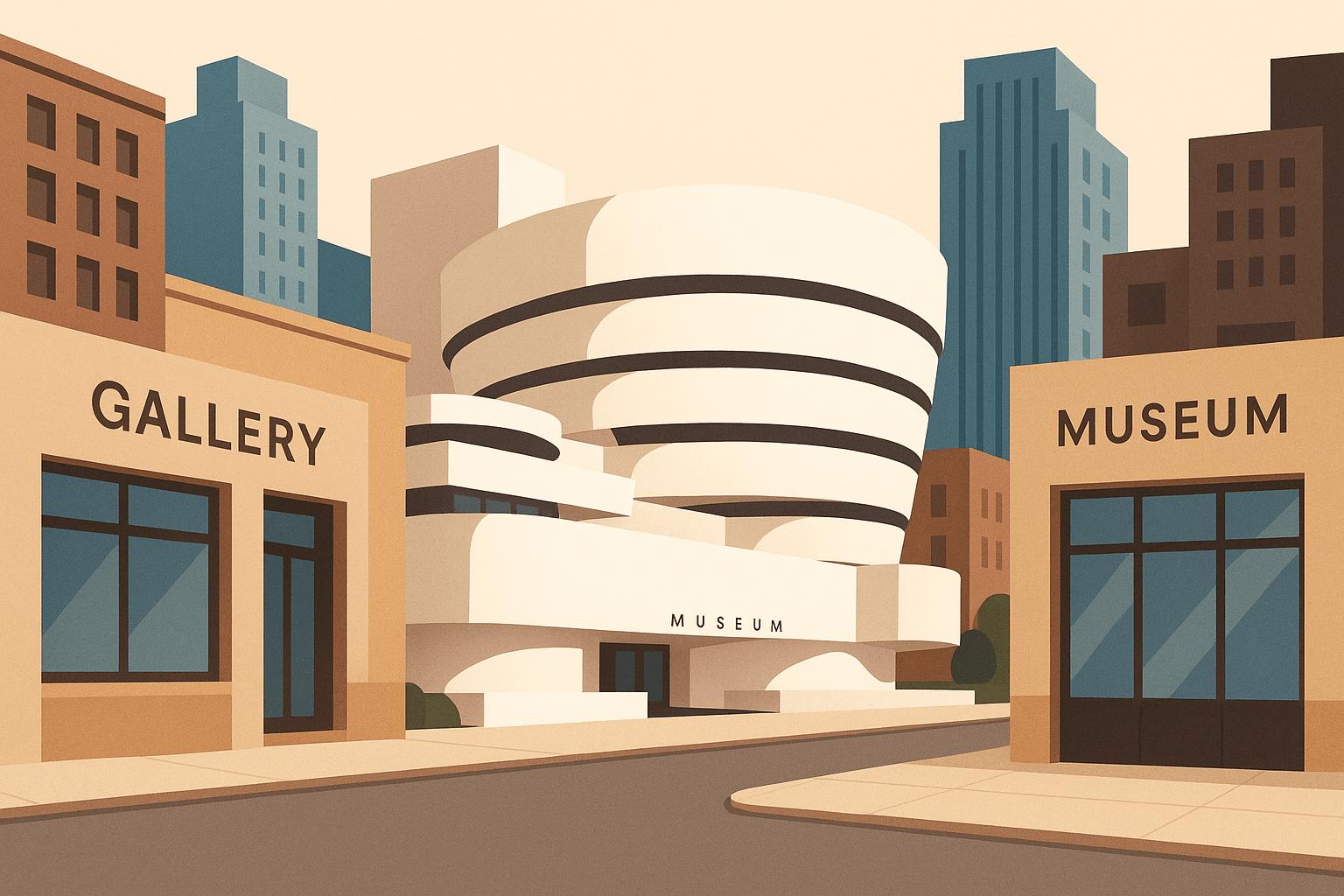
NYC's art institutions fall into three primary categories, each offering unique experiences and career trajectories. Understanding these distinctions is crucial because the competition varies significantly between categories, and some offer more accessible entry points than others.
The Museum Powerhouses: Where Prestige Meets Pressure
Look, I'm not gonna sugarcoat it—your GPA absolutely matters for places like MoMA, the Met, Whitney, and Guggenheim. But even if you have a 4.0, that's just your entry ticket. What they really want to see is that you're genuinely obsessed with art history and can actually contribute something valuable, not just fetch coffee (though you'll probably do that too).
The application process is brutal—I'm talking months of preparation for what might be a 10-week unpaid position. You need recommendation letters that make you sound like the next great art historian, which means you better start building real relationships with your professors now, not two weeks before the deadline.
These positions offer unparalleled access to world-class collections and curatorial expertise, but they typically demand exceptional academic credentials and require applications 3-6 months in advance. The networking opportunities and resume credentials can open doors throughout your career.
What sets apart successful museum interns? They understand that these institutions value scholarly rigor above all else. Your application materials should reflect deep engagement with art historical methodology and demonstrate your ability to contribute to the institution's educational and research missions.
Recent developments show how institutions are expanding their reach to younger audiences. "The Met High School Internship Program offers paid opportunities for students who reside in or attend a high school or home school in New York, New Jersey, or Connecticut" according to Mommy Poppins, highlighting how major museums are creating more accessible pathways for emerging talent.
Gallery Internships: Where Commerce Meets Creativity
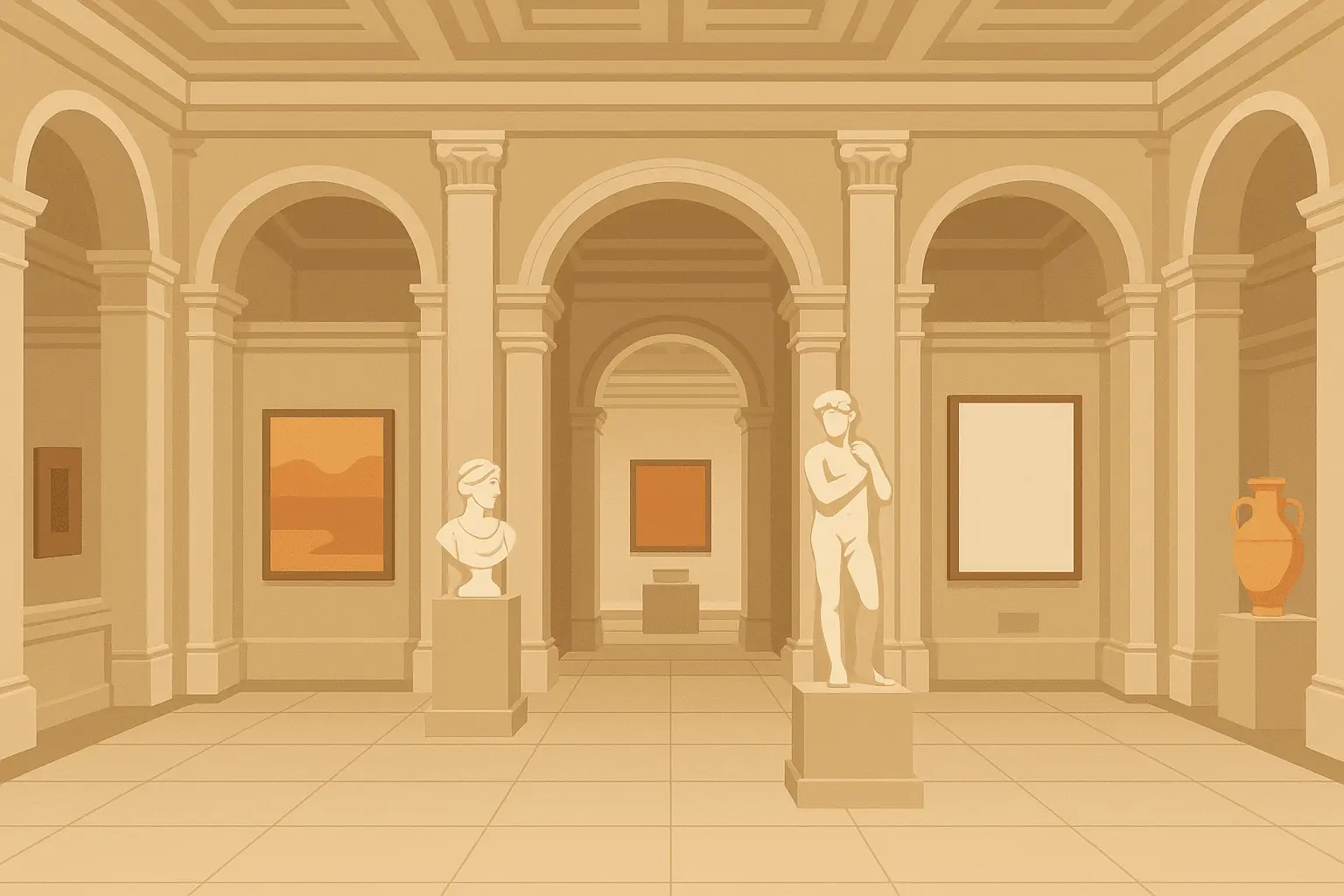
Here's the real tea about gallery internships: they don't care if you can write a brilliant analysis of Botticelli. They want to know if you can juggle five different tasks without having a meltdown, talk to collectors without sounding like a deer in headlights, and catch the tiny mistakes that could cost them thousands of dollars. It's a completely different skill set.
The commercial gallery scene spans from Chelsea's established blue-chip spaces to emerging galleries in the Lower East Side and Brooklyn. These internships often provide more direct client interaction and business experience than museum positions, frequently serving as stepping stones to full-time gallery careers.
Gallery internships operate at breakneck speed—you might find yourself researching potential collectors one day and helping install a major exhibition the next. The pace is intense, but honestly? It's also kind of addictive once you get the hang of it.
And here's something that might frustrate you: half the best gallery positions never even make it online. I know, I know—it feels unfair when you're refreshing job boards every day. But this is why showing up to openings and actually talking to people (even when you feel awkward) is so crucial.
Consider the success story from Marymount Manhattan College, where a student shared: "My internship at Benrubi Gallery in the gallery district in Chelsea placed me in a real work environment where I earned credit toward my photography degree and prepared me for a career after graduation." This demonstrates how gallery internships provide practical, career-focused experience that directly translates to post-graduation opportunities.
Auction House Excellence: Where Art Meets High Stakes
Auction house internships are intense in a way that's hard to describe until you're there. Picture this: you're 22 years old, handling a painting worth more than your parents' house, trying not to hyperventilate while learning how to spot a fake Picasso. The learning curve is steep, but honestly? It's also kind of thrilling (once you get over the initial terror).
Sotheby's, Christie's, and Phillips offer some of the most competitive internships in the art world. These positions provide exposure to high-value transactions and international clientele, requiring exceptional attention to detail and often preferring candidates with combined art history and business backgrounds.
The environment is fast-paced and detail-oriented—a single error in a catalog description can have significant financial implications. You're working with million-dollar artworks while learning the intricate process of authentication, provenance research, and market analysis.
These internships often lead to specialist positions within specific collecting categories. Whether you're passionate about contemporary art, Old Masters, or decorative arts, auction houses provide intensive training in market dynamics and connoisseurship that's difficult to find elsewhere.
Mastering the Application Timeline Game
Okay, this is going to sound crazy, but you need to start thinking about summer internships while everyone else is still recovering from Halloween. December through February is crunch time, and I'm not exaggerating when I say you'll be working on applications while your friends are binge-watching Netflix during winter break. Is it worth it? Absolutely. But don't say I didn't warn you.
Success in securing NYC art internships depends heavily on understanding and respecting application cycles. Most prestigious positions require applications 4-6 months in advance, with timing varying significantly between summer programs, academic year opportunities, and special exhibition periods.
Understanding the competitive landscape is crucial—applying for and securing an art world internship often takes 3-4 months and requires initiative and professionalism on the part of the student, according to Fordham University's Art History Department. This timeline emphasizes the need for strategic planning well in advance of your desired start date.
|
Application Period |
Program Type |
Typical Timeline |
Competition Level |
Key Advantages |
|---|---|---|---|---|
|
December-February |
Summer Programs |
4-6 months advance |
Highest |
Most structured, best networking |
|
September-November |
Spring Semester |
2-3 months advance |
Moderate |
Less competition, direct mentorship |
|
May-July |
Fall Semester |
2-3 months advance |
Moderate |
Academic year integration |
|
Rolling |
Special Exhibitions |
1-2 months advance |
Variable |
Foot-in-door opportunities |
Summer Program Strategy: The Early Bird Advantage
Most major institutions accept summer internship applications between December and February, with notifications typically arriving by March. This timeline requires exceptional advance planning and portfolio development, but summer programs often offer the most comprehensive experiences and strongest networking opportunities.
December through February represents crunch time for summer applications. While your classmates are focused on finals and winter break, you need to be polishing cover letters and gathering recommendation letters. Trust me, your future self will thank you for starting early.
The competition for summer positions is fierce because these programs often provide the most structured learning experiences. Many institutions design their summer programs specifically for students, offering mentorship opportunities and educational components that aren't available during the academic year.
Start your preparation in October. Research institutions thoroughly, identify specific departments or projects that align with your interests, and begin reaching out to professors for recommendation letters. The strongest applications demonstrate clear understanding of the institution's current exhibitions and initiatives.
Academic Year Opportunities: The Hidden Gems
Here's something most people don't realize: sometimes the less glamorous timing works in your favor. Fall and spring internships can actually be better than the competitive summer programs because you're not competing with 200 other interns for face time with the curator. Plus, if you're still in school, you might be able to get academic credit, which at least makes the 'unpaid' part sting a little less.
Academic year internships often feature rolling deadlines and may offer more flexibility and direct mentorship opportunities than their summer counterparts. While still requiring 2-3 months advance planning, these positions sometimes face less competition and can provide more individualized experiences.
The application process is often less formal, but don't let that fool you into thinking these positions are easier to secure. Institutions still expect polished materials and clear articulation of your goals and qualifications.
Many academic year interns find themselves becoming integral parts of ongoing projects, sometimes continuing their work into the following semester or summer. This continuity can lead to stronger relationships and better learning outcomes than shorter-term positions.
Most art world internships involve 10-20 hours of work per week, making them manageable alongside academic coursework while still providing substantial professional experience.
Special Exhibition and Holiday Opportunities: The Strategic Play
Look, I get it—a two-week temp position helping with crowd control doesn't sound glamorous when you're dreaming of curating the next Whitney Biennial. But here's some real talk: these 'lesser' opportunities are often how you actually get your foot in the door. I know someone who started by helping with coat check at a museum gala and ended up getting hired full-time six months later. Sometimes you have to start where you can, not where you want to.
Many institutions hire temporary interns during busy exhibition periods or holiday seasons. These shorter-term opportunities can provide valuable networking and experience for future applications, often with more flexible requirements but still demanding professionalism and reliability.
Major exhibitions require additional staffing for everything from visitor services to research support, creating openings that might not exist during regular programming periods. Holiday seasons bring unique opportunities, particularly at institutions with significant visitor programs.
These positions can be particularly valuable for students who are still exploring different aspects of the art world. A two-week stint helping with a major exhibition can provide insights into whether curatorial work, education, or administration aligns with your interests.

Building Your Competitive Edge in the Art World
Standing out in NYC's saturated internship market requires strategic skill development that combines traditional art historical knowledge with modern digital competencies and practical experience. Success depends on demonstrating both intellectual depth and professional capabilities, showing institutions that you can contribute meaningfully from day one while continuing to grow throughout your internship.
Let's talk about the elephant in the room: most of these internships are unpaid, and NYC is expensive as hell. I've seen too many talented students turn down amazing opportunities because they couldn't figure out the housing situation. This isn't just about finding a cheap place—you need somewhere that won't drain all your energy with a two-hour commute each way.
For students pursuing competitive internships, securing reliable housing near major cultural institutions is crucial. Many art interns find that staying in Upper Manhattan provides convenient access to both Museum Mile institutions and emerging gallery districts while maintaining affordable living costs during unpaid or low-paid internship periods.
Essential Skills That Actually Matter
Today's art interns need a sophisticated blend of academic foundation, technical proficiencies, and soft skills that enable them to thrive in fast-paced, high-pressure environments. The most successful candidates demonstrate both scholarly rigor and practical capabilities, showing they can contribute to research projects while handling administrative responsibilities professionally.
The evolving nature of art institutions is creating new opportunities for interdisciplinary work. As one Fordham student discovered, "it would be great to work at an organization like this, that combines art and climate action" when describing the Climate Museum, highlighting how modern art institutions are expanding beyond traditional boundaries to address contemporary issues.
Academic Foundation: Beyond the Basics
Your transcript tells a story—make sure it's the right one. While most positions prefer art history, museum studies, or related majors with strong GPAs, the most competitive candidates distinguish themselves through specialized coursework that demonstrates both breadth of knowledge and depth in areas relevant to their target institutions.
Beyond maintaining a strong GPA, strategic course selection can set you apart from other candidates with similar backgrounds. Digital humanities courses are increasingly valuable as institutions digitize collections and expand online programming. Understanding how technology intersects with traditional art historical methods demonstrates forward-thinking that many institutions prize.
Don't neglect business or nonprofit management courses if you're interested in gallery or museum administration roles. The art world operates within complex financial and organizational structures that require business acumen alongside artistic knowledge.
Language skills can provide significant advantages, particularly for institutions with international collections or programs. Fluency in languages relevant to your area of interest—whether that's Italian for Renaissance art or Mandarin for contemporary Asian markets—can open doors to specialized research opportunities.
Academic requirements are taken seriously—students are expected to have completed a minimum of 60 hours of course work and hold a GPA of 3.0 or above in order to be approved for college credit, according to Fordham University's standards, though exceptions can be made for students in good academic standing.
Digital Proficiencies: The New Non-Negotiables
Adobe Creative Suite isn't optional anymore—it's expected. InDesign for exhibition materials, Photoshop for image editing, and Illustrator for graphics are tools you'll use regularly in most art world positions. If you're still fumbling around trying to figure out layers in Photoshop, you're already behind.
Database management might sound boring, but it's where much of the real work happens. Collections management systems like TMS, PastPerfect, or Omeka power everything from exhibition planning to scholarly research. Familiarity with these platforms can make you immediately useful to potential supervisors.
Social media skills go beyond posting pretty pictures on your personal Instagram. Institutions need interns who understand how to create engaging content that serves educational goals while building audience engagement. This includes understanding platform-specific best practices and basic analytics.
Photography and videography skills are increasingly valuable as institutions document exhibitions, create virtual tours, and develop online educational content. You don't need professional-level expertise, but understanding composition, lighting, and basic editing can set you apart.

Crafting Application Materials That Get Noticed
Your application materials must demonstrate both passion for art and professional capabilities through carefully curated portfolios and compelling personal statements. The strongest applications go beyond generic enthusiasm to showcase specific skills, relevant experience, and clear understanding of the institution's mission and current initiatives.
Here's what I wish someone had told me: generic applications get generic results (usually rejection). You need to show that you've actually done your homework about the specific institution and can articulate why you're a perfect fit for what they're doing right now.
Application Materials Checklist:
- Tailored cover letter addressing specific institution and department
- Updated resume highlighting relevant coursework and experience
- 2-3 writing samples demonstrating analytical and communication skills
- Portfolio of visual work (if applicable to position)
- Academic transcript (unofficial acceptable for initial applications)
- 2-3 professional references with contact information
- Research statement outlining specific interests and goals
Research Projects: Showcasing Your Scholarly Potential
Your research portfolio should tell the story of your intellectual development and demonstrate your ability to contribute to scholarly discourse. Choose projects that showcase different skills—perhaps one that demonstrates archival research abilities and another that shows your facility with visual analysis.
Including examples of art historical research, exhibition reviews, or curatorial projects demonstrates analytical thinking and writing skills that institutions value highly. Quality trumps quantity—one exceptional research project carries more weight than multiple mediocre examples.
Exhibition reviews can be particularly effective because they demonstrate your ability to engage critically with contemporary curatorial practice. Don't just summarize what you saw—analyze the curatorial decisions and their effectiveness in communicating the exhibition's themes.
Independent research projects carry special weight because they demonstrate initiative and sustained intellectual engagement. If you've conducted original research using primary sources or developed new interpretations of familiar material, highlight these achievements prominently.
A successful approach comes from students who leverage multiple internship experiences strategically. As one Marymount Manhattan graduate noted: "During my time at MMC, I was able to complete four internships. The first was at Free Arts NYC, followed by the Antiquities Department at Christie's, then the Metropolitan Museum of Art, and finally, The Solomon R Guggenheim Museum", demonstrating how building a progression of increasingly prestigious positions creates a compelling narrative.
Professional Writing: Finding Your Voice
Writing samples should demonstrate range—your ability to communicate with scholarly audiences, general public, and specialized collectors or donors. Each requires different approaches and vocabularies, and showing you can handle all three makes you incredibly valuable.
Gallery texts, press releases, and academic papers demonstrate your ability to communicate about art to different audiences, a crucial skill in today's art world. The most effective writing samples are tailored to match the institution's voice and mission while showcasing your versatility and communication skills.
Gallery texts are particularly valuable because they show you can distill complex ideas into accessible language without sacrificing intellectual rigor. The best gallery texts educate without condescending and engage without oversimplifying.
Avoid including writing that's purely descriptive—institutions want to see analysis, interpretation, and original thinking. Your writing should demonstrate that you can contribute meaningfully to institutional goals, not just complete assigned tasks.
Visual Documentation: The Technical Edge
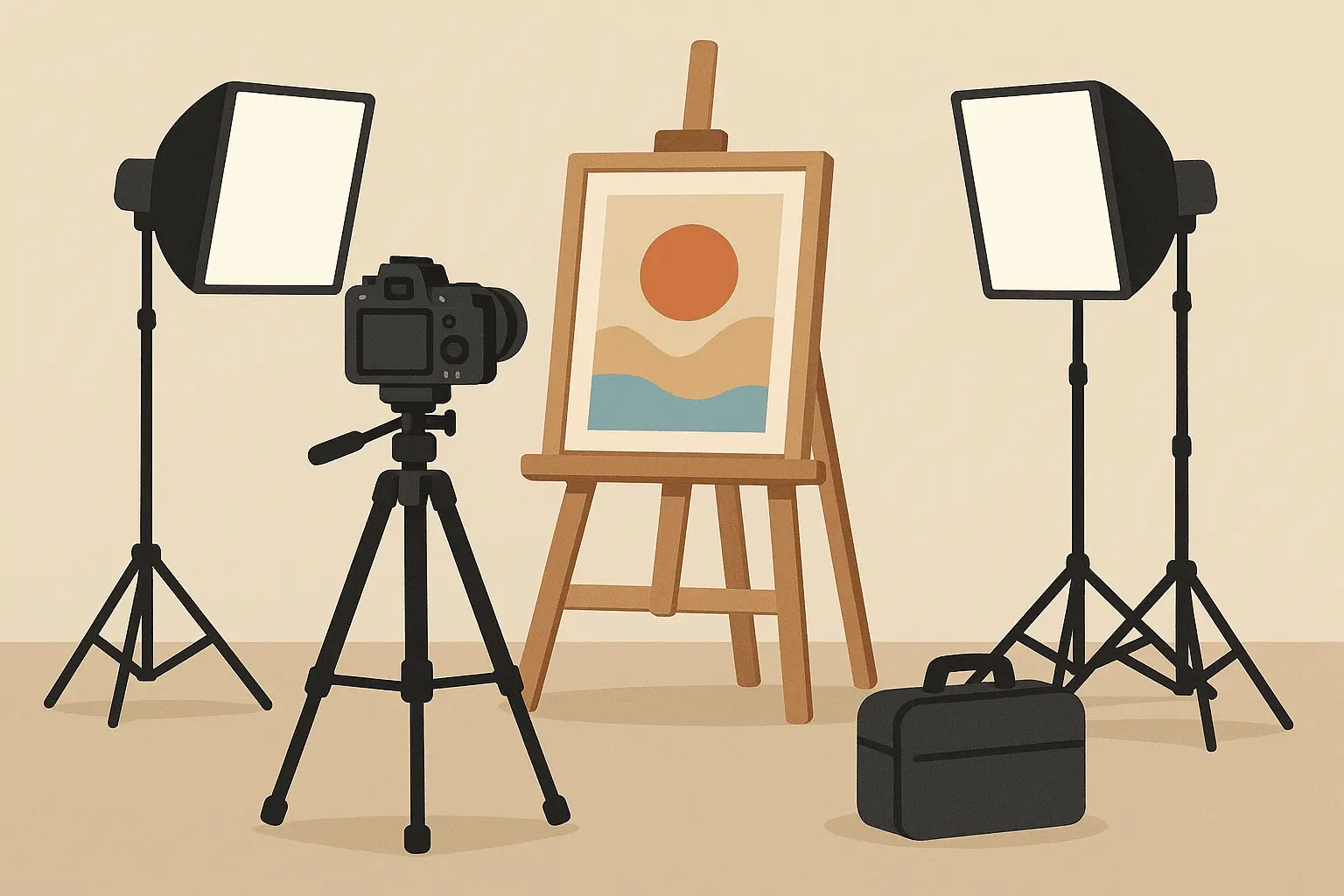
High-quality artwork photography is a specialized skill that many institutions need but few interns possess. Understanding proper lighting, color accuracy, and composition for artwork documentation can make you immediately valuable.
Examples of artwork photography, installation documentation, or graphic design work demonstrate technical competency and aesthetic sensibility that many institutions find valuable. These skills are increasingly important as institutions expand digital programming and online presence.
Don't include amateur work—better to have fewer examples of professional-quality documentation than many examples that don't meet institutional standards. If you're not confident in your technical skills, consider taking a workshop or working with a mentor to develop these capabilities.
Mastering the Art of Professional Networking
I used to think gallery openings were just fancy parties where people pretended to understand abstract art while drinking cheap wine. Boy, was I wrong. These are actually networking goldmines, but you have to approach them right. Don't be that person who obviously just wants something—actually look at the art, have real conversations, and follow up like a human being, not a robot.
Success in NYC's art world relies heavily on relationships and insider knowledge that can't be gained through applications alone. Building authentic connections through strategic networking opens doors to unadvertised opportunities and mentorship relationships that can shape your entire career trajectory.
The strategic location of your housing can significantly impact your networking opportunities. Art students often find that living near Midtown provides easy access to major galleries, auction houses, and networking events, while evening receptions and openings become more accessible when you don't have to worry about long commutes home.
Strategic Event Navigation
NYC's constant stream of art events provides numerous networking opportunities, but approaching them strategically is essential for building meaningful professional relationships rather than simply collecting business cards. The most successful networking happens when you're genuinely engaged with the art and prepared to contribute to conversations rather than just seeking personal advancement.
Gallery Opening Mastery: Beyond the Wine and Cheese
Trust me on this one: it's way better to have one real conversation with someone who remembers you than to speed-network your way through the entire room like you're collecting Pokemon cards. I learned this the hard way after spending an entire opening collecting business cards from people who probably forgot my name before I even walked away.
Attending gallery openings with specific goals—researching artists and galleries beforehand, preparing thoughtful questions, and focusing on quality conversations—can lead to meaningful professional connections. The key is following up within 48 hours with personalized messages that reference specific conversation points.
Research before you go. Know the artist's background, understand the gallery's program, and have informed questions ready. This preparation allows you to engage in substantive conversations rather than generic small talk.
The follow-up is where most people fail. Send personalized messages within 48 hours, referencing specific points from your conversation. Don't just say "nice to meet you"—mention the particular artwork you discussed or the career advice they shared.
Gallery staff are often more accessible at openings than during regular business hours. Directors, curators, and registrars who might be too busy for informational interviews during the week are often happy to chat about their work in the more relaxed opening environment.
Art Fair Intelligence: Maximizing High-Density Networking
Art fairs represent networking on steroids—hundreds of galleries, thousands of artworks, and countless industry professionals all concentrated in a few days. The intensity can be overwhelming, but strategic approach pays dividends.
Events like Frieze, The Armory Show, and ADAA Art Show offer concentrated networking opportunities with industry professionals from around the world. Volunteering at these events provides insider access and demonstrates serious commitment to the field while creating natural conversation starters.
Volunteering is your secret weapon. Fair volunteers get behind-the-scenes access, work directly with gallery staff, and demonstrate commitment that sets them apart from casual attendees. Plus, you'll have natural conversation starters with everyone you meet.
VIP previews and special events offer the highest concentration of industry professionals in more intimate settings. If you can access these events (often through volunteering or student programs), prioritize them over general admission days.
|
Event Type |
Best For |
Networking Strategy |
Time Commitment |
Access Level |
|---|---|---|---|---|
|
Gallery Openings |
Building local relationships |
Quality conversations, follow-up |
2-3 hours |
Open to public |
|
Art Fairs |
International connections |
Volunteering, VIP access |
Multiple days |
Varies by event |
|
Museum Events |
Academic networking |
Lecture attendance, receptions |
2-4 hours |
Member/student rates |
|
Professional Conferences |
Industry insights |
Panel participation, workshops |
2-3 days |
Registration required |
Educational and Professional Organizations: Your Career Infrastructure
Your fellow students and recent graduates will become your professional network for decades to come. The person sitting next to you in a CAA session might become a museum director in fifteen years—invest in these relationships now.
Joining relevant professional organizations and attending educational programs provides structured networking opportunities while demonstrating serious career commitment to potential employers and mentors. These organizations offer peer connections, professional development resources, and access to industry insights that can accelerate your career development.
When attending professional conferences and multi-day events, having centrally located housing becomes essential for maximizing your networking opportunities without the exhaustion of lengthy commutes between venues and accommodations.
Student and Young Professional Networks: Your Peer Advantage
Organizations like CAA (College Art Association) student chapters and Young Collectors Council programs offer peer networking and mentorship opportunities specifically designed for emerging professionals. These connections often prove more valuable than senior-level contacts because your peers will grow alongside you throughout your career.
Young professional groups offer unique advantages because everyone's in similar career stages. You can share resources, collaborate on projects, and support each other through the inevitable challenges of breaking into the art world.
Don't overlook online communities and social media groups focused on art careers. Platforms like LinkedIn and specialized Facebook groups can provide ongoing support and job leads that complement in-person networking.
Turning Your Internship Into a Career Launchpad
Once you've secured an internship, strategic approaches to learning, relationship-building, and skill development can transform a temporary position into a career-launching experience. The most successful interns go beyond completing assigned tasks to actively seek learning opportunities and build relationships that extend far beyond their internship period.
Successfully completing internships often requires balancing work commitments with academic schedules and social obligations. Students frequently find that flexible housing arrangements that accommodate varying schedules and provide study spaces become crucial for managing the demands of competitive internship programs.
Professional Development That Actually Develops You
Show up, do great work, and solve problems before anyone asks you to. It really is that simple. But here's where it gets interesting—the interns who really succeed are the ones who treat their position like an intensive learning laboratory, not just a box to check on their resume.
Successful interns approach their positions as intensive learning laboratories, actively seeking opportunities to build skills and relationships that will serve their long-term career goals. This requires going beyond basic task completion to demonstrate initiative, curiosity, and professional growth throughout the internship experience.
Building Mentorship Relationships That Last
Mentorship doesn't happen automatically—you need to cultivate these relationships intentionally. Identify staff members whose career paths interest you and approach them with specific, thoughtful questions about their experiences.
Identifying potential mentors within your organization and approaching them with specific questions and genuine interest in their career paths creates relationships that can provide guidance throughout your career. The key is offering value in return and maintaining connections beyond your internship period.
Don't just ask for advice—offer to help with projects or research that aligns with their work. The best mentoring relationships are mutually beneficial, even when there's an obvious experience gap.
Ask about their career journey, including mistakes they made and lessons they learned. Most professionals are happy to share insights that might help you avoid common pitfalls.
The power of mentorship extends beyond professional guidance, as demonstrated by one student's experience: "After her internship with multi-media artist Jo Wood-Brown, Class of 2014's Jamie Allen not only gained a mentor-student relationship but also a 'special and important friendship' she'll cherish for the rest of her life", showing how internships can create lasting personal and professional bonds.
Cross-Departmental Learning: The 360-Degree Approach
Most institutions operate as complex ecosystems where different departments must collaborate effectively. Understanding these relationships makes you a more valuable employee and helps you identify where your interests and skills align best.
Requesting opportunities to observe or assist other departments provides comprehensive understanding of institutional operations while demonstrating initiative and helping identify your preferred career path. This broader perspective makes you more valuable to current and future employers.
Ask your supervisor about opportunities to shadow colleagues in other departments or assist with cross-departmental projects. Most managers appreciate interns who show curiosity about the broader organization.
Even if you're not interested in education careers, understanding how institutions engage with diverse audiences helps you communicate more effectively about art. Development and fundraising departments reveal how institutions sustain themselves financially—knowledge that's valuable regardless of your specific career path.

Documentation and Reflection: Building Your Professional Archive
Create a comprehensive internship journal that goes beyond basic task lists. Document specific projects, skills you developed, challenges you overcame, and insights you gained about the field.
Keeping detailed records of projects, skills learned, and connections made creates valuable documentation for future applications while helping you articulate your experience effectively to potential employers. This practice also supports ongoing professional development and career planning.
Take photos of exhibitions you helped install, events you supported, or projects you completed (with appropriate permissions). Visual documentation helps you remember details and provides concrete examples for future interviews.
Reflect regularly on what you're learning about yourself and your career interests. Internships often reveal preferences and aptitudes you didn't know you had—document these insights for future career planning.
Internship Success Tracking Template:
- Weekly reflection journal entries
- Project documentation with photos/examples
- Professional contact database with notes
- Skills development log
- Career insights and preference discoveries
- Performance feedback documentation
- Future opportunity identification
Transition Strategies: From Intern to Professional
Excellence isn't about perfection—it's about consistency, reliability, and continuous improvement. Show up on time, meet deadlines, and communicate proactively about challenges or delays.
The most successful interns position themselves for future opportunities by demonstrating exceptional value, maintaining professional relationships, and understanding the job market landscape. This requires strategic thinking about how your internship experience translates into career advancement and ongoing professional development.
As internships transition into job searches, many young professionals find that maintaining stable housing during career transitions provides the security needed to pursue competitive positions without the stress of housing uncertainty affecting interview performance or job search timelines.
Performance Excellence That Gets Noticed
Exceeding expectations through reliability, attention to detail, and proactive problem-solving demonstrates professional readiness while positioning you for future opportunities. Volunteering for challenging projects and consistently meeting deadlines shows supervisors that you're ready for increased responsibility.
Volunteer for projects that stretch your abilities. The most memorable interns are those who tackle challenging assignments with enthusiasm and deliver quality results.
Take initiative when you see opportunities to improve processes or solve problems. Don't wait to be asked—identify needs and propose solutions.
Long-term Relationship Maintenance: Your Professional Network
Your internship relationships don't end when your program does—they're the foundation of your professional network. Maintain these connections thoughtfully and authentically.
Staying connected with supervisors and colleagues through professional social media, occasional check-ins, and attendance at institutional events ensures that relationships continue beyond your internship period. Many full-time positions are filled through internal networks, making these ongoing connections invaluable for career advancement.
Connect with colleagues on LinkedIn and engage meaningfully with their professional updates. Share relevant articles, congratulate them on achievements, and comment thoughtfully on their posts.
When job opportunities arise at your former institution, you'll have insider knowledge and established relationships that give you significant advantages over external candidates.
Finding the right housing situation can make or break your NYC internship experience. Student Housing NYC understands the unique challenges facing art students and interns, offering all-inclusive housing solutions that eliminate the stress of managing utilities while providing predictable monthly costs. With locations strategically positioned near major art institutions—from the Upper East Side's Museum Mile to Brooklyn's emerging galleries—you'll spend less time commuting and more time building your career.
The community aspect creates natural networking opportunities with other ambitious students and young professionals, leading to collaborative projects and job referrals that can accelerate your career development. When you're focused on landing competitive internships and building professional relationships, simplified housing logistics through Student Housing NYC lets you channel your energy where it matters most.
Ready to take the next step in your art career journey? Explore Student Housing NYC's locations and find the perfect base for your internship success.
Final Thoughts
Before I wrap this up, let me just say: this whole process is going to feel overwhelming sometimes. You're going to get rejected from places you really wanted, and you're going to question whether you're cut out for this world. That's normal. Every single person working in NYC's art scene has been where you are right now, feeling like they don't belong and wondering if they're good enough.
The difference between the people who make it and the people who don't isn't talent or connections—it's persistence and the willingness to keep showing up, even when it's hard.
Breaking into NYC's competitive art internship market requires strategic planning, authentic relationship building, and a commitment to excellence that extends far beyond basic task completion. Success comes from understanding that internships aren't just temporary positions—they're intensive learning experiences that can shape your entire career trajectory when approached with intention and professionalism.
The art world might seem intimidating from the outside, but it's ultimately built on relationships between people who share genuine passion for art and culture. Your success depends not just on your credentials or connections, but on your ability to contribute meaningfully to the institutions and communities you join.
Remember that everyone in the art world started somewhere—even the most established curators, dealers, and museum directors were once students trying to break into the field. The key is approaching each opportunity with curiosity, professionalism, and authentic engagement with the art and ideas that drive this industry. Your pursuit of art internships NYC offers is just the beginning of what can become a lifelong career contributing to one of humanity's most important cultural endeavors.