Table of Contents
TL;DR
- NYC has some of the best-paying cybersecurity internships in the country - financial firms pay $35-50/hour, tech giants offer $30-45/hour
- Summer program applications open September-December, so you need to start planning at least 6 months ahead
- You absolutely need Python, Wireshark, and knowledge of security frameworks like NIST and OWASP to be competitive
- Networking at events like BSides NYC often matters more than perfect grades
- Government positions pay less ($20-30/hour) but give you security clearance opportunities that pay off long-term
- Converting your internship to a full-time job requires going above and beyond and building real relationships
The NYC Cybersecurity Scene: Where Opportunity Meets Reality
New York City is where cybersecurity careers really take off. You've got Wall Street's financial powerhouses, cutting-edge tech companies, and government agencies all creating an internship ecosystem that can seriously boost your security career. But here's the thing - understanding how this market actually works gives you a real edge over other candidates.
The numbers are pretty compelling. Cybersecurity internships in NYC pay some of the highest rates in the country, and employment of information security analysts is projected to grow 29 percent from 2024 to 2034, much faster than the average for all occupations according to the U.S. Bureau of Labor Statistics. But it's not just about the money.
You're stepping into a market where one internship can connect you with industry leaders, expose you to billion-dollar security operations, and give you experience that fast-tracks your career by years. According to Prosple, approximately 750,000 jobs are unfilled in the US cybersecurity industry, with currently 1.2 million employees working in cyber security industry in the US. That's a massive opportunity gap that NYC internships can help you fill.
Financial Services: Where the Real Learning Happens
Look, Wall Street firms aren't messing around when it comes to security. They're dealing with threats that would make your head spin - we're talking about protecting trillions of dollars from some seriously sophisticated bad guys.
Goldman Sachs, JPMorgan Chase, Morgan Stanley - these aren't just big names to put on your resume. They're pressure cookers where you'll see stuff that most security professionals never encounter. Advanced persistent threats, zero-day exploits, security budgets bigger than some companies' entire revenue. It's intense, but that's exactly why it's so valuable.
Real talk: These firms care a lot about compliance. Before you apply, spend some time learning about SOX, PCI-DSS, and FFIEC. You don't need to be an expert, but knowing what these acronyms mean will show you've done your homework.
The competition is brutal - I won't sugarcoat that. But if you make it in, the connections you build are gold. These people have seen it all, and they remember the interns who impressed them. Plus, if you're thinking about living in Manhattan during your internship, being close to the financial district with convenient housing near Manhattan's financial district means less time on the subway and more time actually learning.
Take Sarah - she was just a regular computer science student who somehow landed at JPMorgan. During her summer there, she worked on multi-factor authentication, sat in on incident response exercises, and even found some security improvements that saved the company $2M. Her attention to detail and willingness to suggest improvements got her a full-time offer before her internship even ended. Not bad for three months of work.

Tech Companies: Where Innovation Meets Security
Tech companies in NYC offer a totally different vibe from the buttoned-up financial world. You're looking at cloud security, AI-driven threat detection, and cutting-edge stuff that's shaping where the industry is headed. Less rigid compliance checklists, more creative problem-solving.
Google's NYC office is all about cloud security and privacy engineering. Microsoft focuses heavily on identity and access management. But here's what a lot of students miss - those smaller fintech startups can actually teach you more. You might not get the brand name recognition, but you'll be building security programs from scratch. That experience is incredibly valuable, even if your friends haven't heard of the company. These cyber security intern jobs provide diverse pathways into the industry, each with unique learning opportunities.
Here's something that actually matters: Tech companies want to see your GitHub. They care more about what you've built than what grades you got. Create some repositories showing security tools you've made or vulnerabilities you've found. It doesn't have to be groundbreaking - just show you can actually code and think about security problems.
Startups are a different beast entirely. You'll probably work directly with the CTO, sit in on strategy meetings, and get exposure to decisions that interns at big companies never see. The downside? Less hand-holding and potentially crazy hours. But if you want to understand how security decisions actually get made, startups are where it's at.
The AI boom is creating tons of new opportunities too. Recent industry developments show major consulting firms are channeling productivity gains from artificial intelligence (AI) into existing and new AI capabilities, R&D, cybersecurity and retraining employees according to EY, highlighting how the intersection of AI and cybersecurity is creating new internship opportunities in NYC's tech sector.
Government Work: The Long Game
Federal agencies and defense contractors offer something you can't get anywhere else - access to classified systems and national security operations. The pay might not blow you away initially, but here's the thing about security clearances: they're worth their weight in gold throughout your entire career.
DHS, FBI, various defense contractors - they're always recruiting. And while $20-30/hour might seem low compared to Wall Street, that security clearance can add $10,000-15,000 to your salary for the rest of your career. It's an investment in your future.
Heads up: Start your clearance application early. We're talking 6-12 months of waiting. But once you have it, you're immediately valuable to hundreds of contractors and agencies.
Government work gives you a perspective on cybersecurity that private companies can't match. You're looking at threats from a national security angle, dealing with incident response at scales most people never see. As cyber warfare becomes more prominent, this experience becomes incredibly valuable.
Just look at what happened with student Rohan Kumar, as featured in John Jay College news. He leveraged "internships with the different city agencies—NYC Department of Parks & Recreation, the Department of Youth and Community Development, and the Administration for Children's Services" to advance his cybersecurity career, where he "had the chance to lead awareness training programs, investigate threats, reduce the number of security breaches, and collaborate with senior cybersecurity analysts." Government internships might not have the glamour of tech companies, but they give you real responsibility fast.
Timing: When to Actually Apply
Here's where a lot of students mess up - they don't understand the timing. Most prestigious summer programs follow a pretty predictable schedule. Applications open in September, close by December, interviews happen January through March. Miss these windows, and you're out of luck for the big names.
But here's the insider knowledge: smaller companies and government agencies are way more flexible. They're hiring year-round, and they often have less competition.
Strategy that actually works: Apply to 2-3 reach positions (the dream jobs), 3-4 targets (where you're competitive), and 2-3 safety options. Don't put all your eggs in one basket.
Fall and spring internships get way less attention, which means less competition for you. Winter break programs are often called "externships" - they're shorter but great for networking and can lead to summer offers.
|
Application Timeline |
Financial Services |
Tech Companies |
Government/Defense |
Startups |
|---|---|---|---|---|
|
Application Opens |
September |
October |
Year-round |
November |
|
Deadline |
December |
January |
Rolling |
February |
|
Interview Period |
January-March |
February-April |
2-6 weeks |
March-May |
|
Decision Timeline |
March-April |
April-May |
4-8 weeks |
May-June |
|
Start Date |
June |
May-June |
Flexible |
June-July |
Building Skills That Actually Matter
Let me be straight with you - generic computer science knowledge isn't going to cut it in cybersecurity. You need specific skills that show you're serious about this field, not just looking for any tech job.
The skills gap in cybersecurity is real, which creates opportunities. But only if you've invested in the right areas. Employers can spot someone who's just checking boxes versus someone who actually understands security.

Technical Skills You Can't Skip
Python isn't optional anymore - it's essential. Security teams use it for everything: automation, data analysis, building tools. If you can't write a script to parse log files or automate a vulnerability scan, you're already behind.
What actually helps: Build a portfolio of security-focused Python scripts. Create tools that solve real problems - password analysis, network scanning, log parsing. Employers want to see practical applications, not homework assignments.
Wireshark is another must-have. Every security team needs people who can analyze network traffic. Practice capturing different types of traffic, learn to spot suspicious patterns, and get comfortable extracting indicators of compromise. This isn't theoretical knowledge - you'll use this stuff daily.
SIEM platforms like Splunk, QRadar, ArcSight - these run most security operations centers. They're expensive for personal use, but many offer free training versions or student licenses. Learning query languages and dashboard creation will set you apart from people with purely academic backgrounds.
If you're spending long hours coding and need a quiet place to focus, having access to well-equipped study areas in Manhattan can make the difference between actually finishing these projects and meeting deadlines versus struggling to stay productive.
Marcus built a Python script that automated Windows Event Log analysis for his home lab. He put it on GitHub, documented everything, and wrote a blog post explaining his approach. That one project became a talking point in every interview and helped him land internships at both a fintech startup and a major bank.
Frameworks You Need to Know
Understanding industry frameworks shows you get how cybersecurity actually works in real companies. This isn't academic theory - it's how organizations structure their security programs.
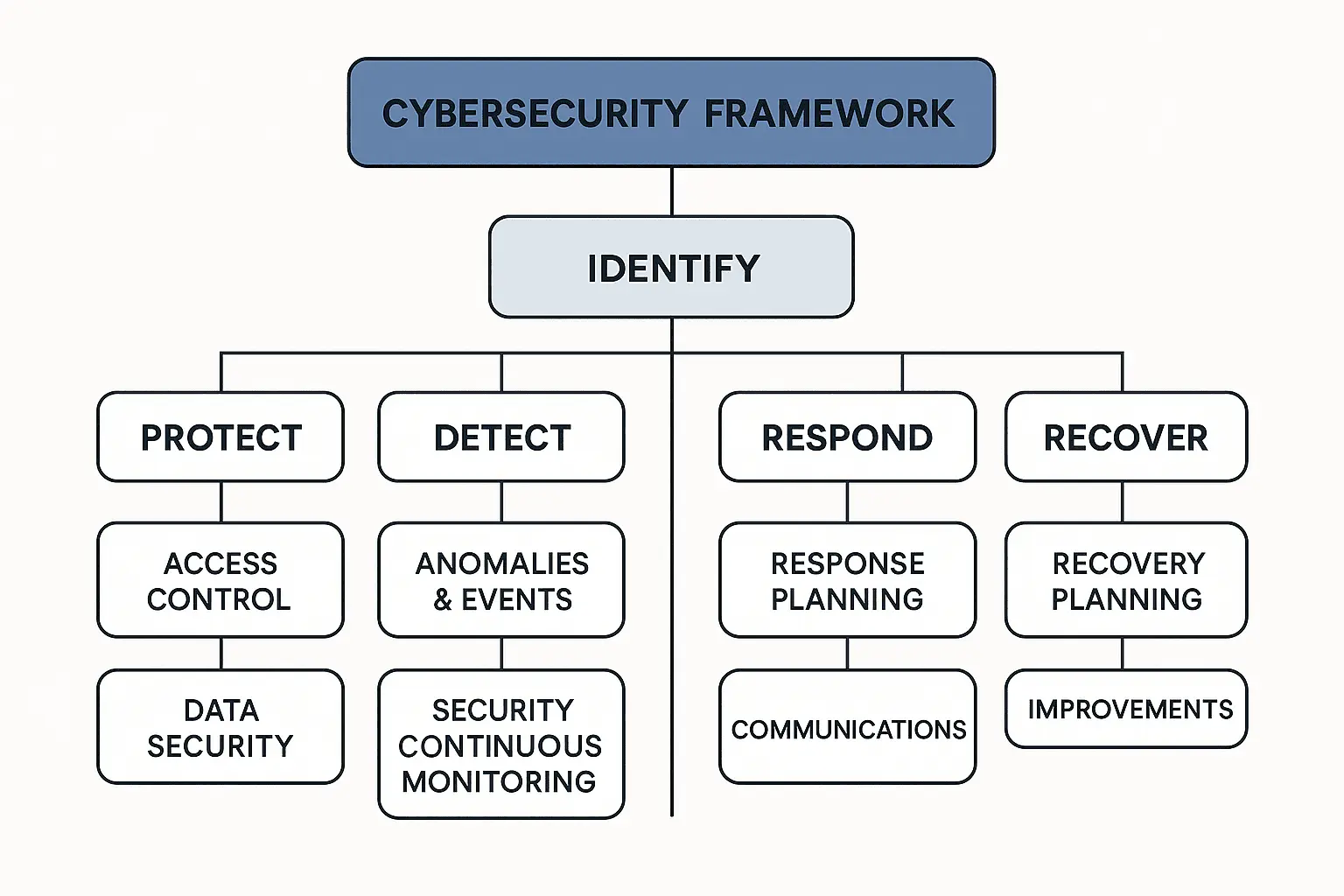
NIST Cybersecurity Framework isn't just something to memorize for tests. It's literally how companies think about security. Understand the five functions - Identify, Protect, Detect, Respond, Recover - and be ready to explain how specific controls map to business goals.
Interview tip: Don't just define frameworks - explain how you'd use them. Instead of reciting NIST CSF definitions, talk about how you'd use it to assess a company's security or prioritize investments.
OWASP Top 10 is fundamental if you want to work with applications or web services. Don't just memorize the list - understand how these vulnerabilities actually show up in real applications and what you can do about them.
ISO 27001 shows you understand information security management systems. It's complex, but grasping the basics of risk management and control implementation demonstrates you think about security strategically, not just tactically.
Certifications That Actually Help
Let's be real about certifications - they can strengthen your applications, but timing and selection matter way more than just collecting them.
CompTIA Security+ is still the gold standard for entry-level security knowledge. It's not exciting, but it covers fundamentals that everything else builds on. Many government positions require Security+ or equivalent, making it especially valuable for cyber security internships new york in the federal sector.
Don't do this: Pursue certifications just to pad your resume. Choose ones that align with your interests and actually teach you something useful. Quality beats quantity every time in cybersecurity.
Network+ gives you networking knowledge that supports security understanding. Since you can't protect what you don't understand, solid networking fundamentals are essential.
Consider specialized certifications based on what interests you. GCIH for incident response, GSEC for general security, or cloud-specific certifications if that's your thing. But focus on learning, not just passing tests.
The job market is still strong despite tech layoffs elsewhere. As Cybersecurity Ventures reports, "While Amazon, Meta, Twitter, Microsoft, Google, and the other tech giants are going through layoffs, our industry has hung out an enormous Help Wanted sign," with expectations for "brisk hiring in the cybersecurity space for the rest of this year, and through 2025."
Hands-On Experience That Counts
Practical experience through labs, competitions, and personal projects shows you can apply what you've learned. This often matters more than grades when employers evaluate candidates.
Capture The Flag competitions are like video games for security people. They give you gamified challenges that build real skills. Start with online CTFs like PicoCTF or OverTheWire to build experience gradually.
Actually useful advice: Document your CTF experiences in blog posts or GitHub repos. This shows your learning process and communication skills - both valuable to employers.
Home labs don't need expensive equipment. Virtual machines running vulnerable applications like DVWA or Metasploitable give you realistic practice environments for penetration testing and vulnerability assessment.
Contributing to open-source security projects, even in small ways, shows you can work with existing codebases and collaborate with other developers. These skills translate directly to internship work.
Cybersecurity Skills Development Checklist:
- Master Python scripting for security automation
- Complete 10+ CTF challenges and document solutions
- Set up home lab with vulnerable applications
- Obtain CompTIA Security+ certification
- Build portfolio of 3-5 security projects
- Contribute to open-source security tools
- Practice with Wireshark and network analysis
- Understand NIST CSF and OWASP Top 10
- Create professional GitHub presence
- Write technical blog posts about security topics
Getting Your Application Right
Successfully navigating NYC's competitive cybersecurity internship market requires more than just strong technical skills. You need strategic networking, compelling application materials, and interview prep that shows both your technical competence and that you'd actually fit in with security teams.
The application process for cybersecurity internships is different from other fields. Technical assessments, security clearance considerations, and industry-specific networking create unique challenges and opportunities.

Networking That Actually Works
Professional networking in cybersecurity goes way beyond career fairs and LinkedIn connections. Industry events, online communities, and mentorship relationships give you insider knowledge and potential referrals to jobs that aren't even posted yet.
BSides NYC is one of the most accessible ways into the city's cybersecurity community. This volunteer-run conference attracts everyone from recent grads to CISOs of major corporations.
Something that actually helps: Don't just attend events - volunteer for them. Volunteering at BSides NYC puts you in direct contact with organizers and speakers, creating natural conversation opportunities that can lead to mentorship or job referrals.
ISACA and (ISC)² local chapters host regular meetings that blend education with networking. These professional associations attract experienced practitioners who often are hiring managers or can provide referrals.
LinkedIn optimization for cybersecurity requires more than listing your coursework. Share thoughtful takes on security news, engage with posts from industry leaders, and publish articles about your learning experiences or project outcomes.
Application Materials That Stand Out
Creating application materials that get noticed requires understanding how applicant tracking systems screen resumes, what hiring managers actually look for in portfolios, and how to write cover letters that show genuine interest in specific companies.
Your resume needs to work for both ATS algorithms and human reviewers. Include relevant keywords like "threat analysis," "incident response," "vulnerability assessment," and "risk management," but make sure they appear naturally, not as obvious keyword stuffing.
What actually works: Quantify your achievements wherever possible. Instead of "participated in cybersecurity club," write "led team of 5 students analyzing network traffic for university's mock incident response exercise, identifying 3 critical vulnerabilities."
GitHub portfolios carry serious weight in cybersecurity hiring. Create repositories that showcase different aspects of security work: automation scripts, vulnerability research documentation, or CTF challenge write-ups.
Cover letters let you demonstrate company-specific knowledge. Research recent security incidents the company faced, new security initiatives they've announced, or technologies they're implementing. Show how your interests and skills align with their current challenges.

Portfolio Projects That Impress
Developing a portfolio that demonstrates practical cybersecurity skills requires creating projects that mirror real-world security challenges while showcasing your ability to document findings and communicate technical concepts.
Vulnerability assessment projects demonstrate practical security skills. Set up intentionally vulnerable applications, conduct assessments using tools like Nessus or OpenVAS, and document findings in professional report formats.
Focus on this: Pay attention to documentation and communication aspects. Security professionals spend significant time writing reports and explaining technical findings to non-technical people. Strong documentation skills set you apart from purely technical candidates.
Network analysis projects show your ability to identify suspicious activity. Capture network traffic from your home network, analyze it with Wireshark, and create visualizations highlighting interesting patterns or potential security concerns.
Automation scripts solve real problems security teams face daily. Create tools that parse log files, automate vulnerability scanning, or generate security reports. Focus on practical utility rather than complexity.
When you're working on intensive portfolio projects that require long coding sessions and research, having access to comfortable living spaces with reliable internet becomes crucial for maintaining productivity and meeting application deadlines.
Jennifer created a comprehensive security assessment of her university's public Wi-Fi network as her capstone project. She documented vulnerabilities, created risk assessments, and presented mitigation strategies to the IT department. Her professional report format and practical recommendations impressed internship recruiters, leading to offers from three different NYC financial firms.
Nailing the Interview
Cybersecurity interviews typically combine technical assessments, behavioral questions, and scenario-based discussions that evaluate both your technical competence and ability to think critically about security challenges under pressure.
Technical interviews often include scenario-based questions rather than pure knowledge tests. Be ready to walk through your thought process for investigating security incidents, responding to breaches, or assessing security risks.
Something interviewers actually care about: Practice explaining technical concepts to non-technical audiences. Many interview questions test your ability to communicate security risks and recommendations to business stakeholders who lack technical backgrounds.
Behavioral questions in cybersecurity often focus on ethical decision-making, handling pressure, and working with sensitive information. Prepare examples that demonstrate your integrity, analytical thinking, and ability to maintain confidentiality.
Come prepared with thoughtful questions about the company's security challenges, team structure, and growth opportunities. Asking about their incident response procedures or security tool stack shows genuine interest and industry awareness.
|
NYC Cybersecurity Internship Compensation by Sector |
Hourly Rate |
Benefits |
Security Clearance Required |
|---|---|---|---|
|
Financial Services (Goldman Sachs, JPMorgan) |
$35-50 |
Housing stipend, networking events |
No |
|
Tech Giants (Google, Microsoft NYC) |
$30-45 |
Flexible hours, remote options |
No |
|
Government/Defense (DHS, FBI contractors) |
$20-30 |
Security clearance sponsorship |
Yes |
|
Startups/Fintech |
$25-40 |
Equity options, direct mentorship |
No |
|
Consulting Firms (EY, Deloitte) |
$28-42 |
Travel opportunities, training |
Varies |
According to Prosple, there's a 35% increase in job outlook for cyber security analysts, making it one of the fastest growing jobs not only in tech, but in the employment landscape as a whole, with salary ranges for cybersecurity interns from $50,329 to $65,325 annually.
Making the Most of Your Internship
Transforming your cybersecurity internship into a career-launching experience requires strategic goal-setting, relationship building, and performance excellence that positions you for full-time opportunities while building the foundation for long-term success.
The most successful cybersecurity interns approach their positions with clear objectives and systematic plans for skill development, networking, and performance optimization. This strategic approach often determines whether internships lead to job offers or just end as resume entries.

Setting Goals That Matter
Work with your supervisor during your first week to identify specific technical skills you'll develop. Whether it's mastering SIEM platforms, learning forensics techniques, or understanding compliance frameworks, having clear skill goals keeps you focused and provides measurable progress.
Actually useful: Keep a learning journal documenting new concepts, tools, and techniques you encounter. This reinforces learning, provides material for future interviews, and shows your commitment to improvement.
Seek opportunities to work on projects that stretch beyond your comfort zone. Volunteer for tasks involving new technologies, different security domains, or cross-functional collaboration. These experiences often provide the most valuable learning and memorable achievements.
Request regular feedback sessions with your supervisor. Monthly check-ins let you course-correct if needed and demonstrate your commitment to improvement. Most managers appreciate interns who actively seek feedback rather than waiting for formal reviews.
Internship Success Checklist:
- Set weekly learning objectives with supervisor
- Maintain detailed learning journal
- Volunteer for challenging projects
- Schedule monthly feedback sessions
- Build relationships across departments
- Document all achievements and contributions
- Attend company security training sessions
- Participate in incident response exercises
- Present findings to senior team members
- Express interest in full-time opportunities
Building Relationships That Last
Identify potential mentors early in your internship. Look for senior team members who demonstrate expertise in areas that interest you, show willingness to share knowledge, and seem approachable for questions and guidance.
Respect people's time: Come to meetings with specific questions, updates on your progress, and clear requests for guidance. Prepared mentees get more valuable advice and maintain stronger relationships.
Don't limit yourself to one mentor. Different professionals can provide insights into various aspects of cybersecurity careers: technical skills, industry trends, career progression, or work-life balance. Multiple perspectives enrich your understanding of the field.
Maintain relationships beyond your internship. Send periodic updates on your progress, share interesting articles or insights, and express gratitude for their guidance. These ongoing relationships often lead to job referrals and career opportunities years later.

Performing at a Level That Gets Noticed
Show up early, stay engaged, and volunteer for additional responsibilities. Security teams often face urgent situations that require all hands on deck. Being the intern who steps up during incident response or critical project deadlines creates lasting impressions.
Document everything: Keep a record of projects completed, problems solved, and positive feedback received. This documentation becomes invaluable when discussing full-time opportunities or future job applications.
Take ownership of your assigned projects rather than simply completing tasks. Propose improvements, identify potential issues, and suggest solutions. This proactive approach demonstrates the critical thinking skills that security professionals need.
Build relationships across different departments and organizational levels by attending company social events, participating in lunch-and-learns, and engaging with colleagues beyond your immediate team. Having convenient housing near major business districts makes it easier to participate in after-work networking events and build these crucial connections.
Converting Success Into Job Offers
Express your interest in full-time opportunities early and often. Don't assume your manager knows you want to stay - make your intentions clear while demonstrating the value you bring to the team.
Know the process: Research your company's typical intern-to-hire conversion rates and timeline. Some companies make offers during the internship, while others wait until closer to graduation. Understanding their process helps you time your conversations appropriately.
Prepare for the transition by understanding what full-time roles require beyond your internship responsibilities. Discuss career progression paths, additional training opportunities, and long-term growth potential within the organization.
If full-time opportunities aren't available immediately, maintain relationships and stay connected. Many companies extend offers to former interns when positions open up, especially if you've maintained positive relationships and continued developing your skills.

Taking Advantage of NYC's Unique Scene
New York City's cybersecurity ecosystem provides networking opportunities, industry events, and career development resources that extend way beyond your specific internship. These advantages can accelerate your career progression throughout the region's interconnected security community.
Take advantage of NYC's concentration of cybersecurity professionals. Attend evening meetups, weekend conferences, and industry events that expose you to different companies, technologies, and career paths.
The city's diverse industry presence means skills developed in one sector often transfer to others. Financial services experience applies to fintech startups, government security knowledge transfers to consulting firms, and enterprise security skills are valuable across industries.
Something that actually helps: Join local cybersecurity Slack channels and Discord servers where NYC professionals share job opportunities, discuss industry trends, and provide career advice. These communities often share opportunities before they're posted publicly.
Consider the long-term advantages of building your career in NYC. The relationships you develop during your internship can support your entire career as you move between companies within the city's interconnected security ecosystem. Having access to flexible housing options allows you to adapt to different internship locations and durations throughout your career development.
How Student Housing NYC Supports Your Cybersecurity Journey
Look, pursuing competitive cybersecurity internships in NYC is demanding enough without worrying about where you're going to live. You need to focus on skill development, networking, and performing well - not stressing about housing.
Student Housing NYC provides the stable foundation you need to excel in NYC's demanding cybersecurity market. Our flexible lease terms work with internship schedules, and our locations near major business districts cut down commute times to Wall Street firms, tech companies, and government agencies.
Our fully furnished apartments include dedicated workspace areas perfect for cybersecurity coursework, CTF competitions, and portfolio development. High-speed internet supports virtual labs and online learning platforms essential for skill development.
Ready to focus on landing your dream cybersecurity internship without housing stress? Explore Student Housing NYC's flexible options and secure your foundation for cybersecurity success.

Wrapping This Up
Successfully launching your cybersecurity career through NYC internships requires strategic preparation, persistent networking, and performance excellence that goes beyond just technical skills. The city's unique ecosystem rewards candidates who understand how things work while providing opportunities you won't find anywhere else in the country.
NYC's cybersecurity internship market rewards preparation, persistence, and strategic thinking. The competition is intense, but the opportunities are unmatched. Your success depends on understanding how the market works while building the technical skills and professional relationships that open doors.
The relationships you build during your internship often matter more than the specific technical skills you develop. NYC's cybersecurity community is surprisingly interconnected - today's fellow intern might become tomorrow's hiring manager, and your current supervisor could recommend you for opportunities throughout your career.
Remember that cybersecurity careers are marathons, not sprints. The foundation you build during your NYC internship - technical skills, professional relationships, and industry knowledge - will support your entire career trajectory. Invest in these fundamentals, and the city's cybersecurity ecosystem will provide opportunities for decades to come.