
Table of Contents
TL;DR
- NYC offers the most diverse psychology internship opportunities in the country, but competition is fierce - start preparing freshman year
- Clinical, research, and community mental health internships each require different preparation strategies and skill sets
- Most competitive summer programs have January-March application deadlines with 3.5+ GPA requirements
- Networking through professional organizations and informational interviews often matters more than perfect grades
- Most internships are unpaid, requiring careful financial planning and creative housing solutions
- Interview preparation should include case study practice, ethical scenarios, and NYC-specific mental health knowledge
- Success depends on strategic positioning, relevant experience, and understanding each organization's specific mission
Understanding NYC's Psychology Internship Ecosystem
Look, getting a psychology internship in NYC is no joke. The competition? Pretty intense. But the opportunities? Honestly unmatched anywhere else in the country.
What makes NYC's psychology scene so crazy is that you've got everything packed into one place. I'm talking world-class hospitals, cutting-edge research labs, and community programs that are actually making a difference - all within a subway ride of each other. You could literally spend your morning at Columbia Presbyterian working with trauma patients, grab lunch in Brooklyn while heading to a community center, and end up at an NYU research presentation that evening. It's wild.
Here's the reality check nobody wants to give you: most students have no idea how early they need to start preparing. While some programs are pretty manageable - I've seen successful placements that only require 12-15 hours per week over 8 weeks - the application process for the good stuff starts months ahead of time. Like, we're talking about applying for summer 2025 positions in early 2025.
Clinical Psychology Internships: Where It Gets Real
Hospital systems in NYC don't mess around with their internship programs. NYU Langone, Mount Sinai, NewYork-Presbyterian - they maintain seriously high standards because, honestly, their interns might become their future colleagues. You'll be working directly with patients dealing with complex mental health stuff while learning from some of the most respected clinical psychologists in the country.
The patient diversity here is genuinely insane. During one shift, you might work with a Wall Street exec having a breakdown, a recent immigrant trying to adjust to life here, and a teenager from Queens dealing with family trauma. This kind of exposure develops skills you just can't get anywhere else.
I heard about Princeton students in NYC mental health programs who were actually meeting with psychiatric patients - kids ranging from 8-15 years old - asking questions about their treatment and safety planning. That's some serious hands-on learning right there, not just shadowing someone around.
The supervision at these major medical centers is honestly incredible. Your supervisors actually invest in your development because they know you're learning skills that could literally save lives. They'll push you to think critically about diagnosis and treatment in ways that no textbook ever could.
Research-Based Opportunities: The Academic Fast Track
University research internships here operate with resources that most schools can only dream about. Columbia's psych department has million-dollar neuroimaging equipment. NYU researchers are tracking data from thousands of participants. Fordham investigators are developing interventions that actually influence national mental health policy.
When you're working on research here, you're contributing to studies that end up in top journals and shape how we understand human behavior. The networking potential alone makes these positions incredibly valuable if you're thinking about grad school.
Here's something I learned the hard way: many programs prioritize advanced students because of how many applications they get. Organizations will straight up tell you they "prioritize rising seniors" when making decisions. So timing really matters with your applications.
The mentorship opportunities in academic settings are exceptional. Your research supervisor might literally be the person who wrote your abnormal psych textbook or developed some breakthrough therapy technique. These connections become gold when you're applying to graduate programs.
Community Mental Health Programs: Where You Actually Make a Difference
Community organizations throughout NYC offer internships that tackle the intersection of mental health and social justice. Places like The Door work with homeless youth, while Fountain House focuses on adults with serious mental illness. You'll get way more hands-on responsibility than at traditional clinical settings while serving people who face real systemic barriers to mental health care.
The learning curve at community mental health organizations is steep, but the impact you'll make is immediate. You might co-facilitate group therapy sessions, do intake assessments, or help develop new programming. The responsibility level often exceeds what you'd get at bigger hospital systems, which means faster professional development.
Take Maya Corda, a psychology major at College of Staten Island who's a Jeanette K. Watson Fellow working with The Bail Project. She's combining psychology training with social justice advocacy, addressing systemic issues affecting urban communities. That's the kind of meaningful work you can do here.
The populations you'll serve represent NYC's incredible diversity - recent immigrants, LGBTQ+ youth, people experiencing homelessness, and families dealing with poverty. This experience develops cultural humility and clinical skills that'll make you more effective no matter what specialty you end up in.
Timing Your Applications: Don't Mess This Up
Here's where most students completely blow it: they don't realize that NYC's most competitive internships have application deadlines six months before the program starts. Summer 2025 internships? Those applications are due in early 2025, often between January and March. I can't stress this enough.
Summer intensive programs typically run 10-12 weeks and offer the most immersive experience you can get. You're working full-time hours, attending weekly supervision meetings, and participating in case conferences with interdisciplinary teams. It's intense, but the learning accelerates your professional development in ways that part-time positions just can't match.
Academic year internships give you different advantages - mainly consistency and depth. Working 15-20 hours per week at the same site for an entire academic year lets you see long-term client progress and develop deeper relationships with supervisors. Many of these have rolling admissions, so there's more flexibility in your timeline.
|
Internship Type |
Duration |
Hours/Week |
Application Deadline |
Best For |
|---|---|---|---|---|
|
Summer Clinical |
10-12 weeks |
35-40 |
January-March |
Intensive clinical experience |
|
Academic Year Research |
8-9 months |
15-20 |
Rolling/September |
Graduate school prep |
|
Community Mental Health |
8-16 weeks |
12-25 |
Varies |
Social justice focus |
|
Hospital-Based |
10-12 weeks |
30-40 |
February-April |
Medical setting exposure |
Geographic Strategy: Don't Sleep on the Outer Boroughs
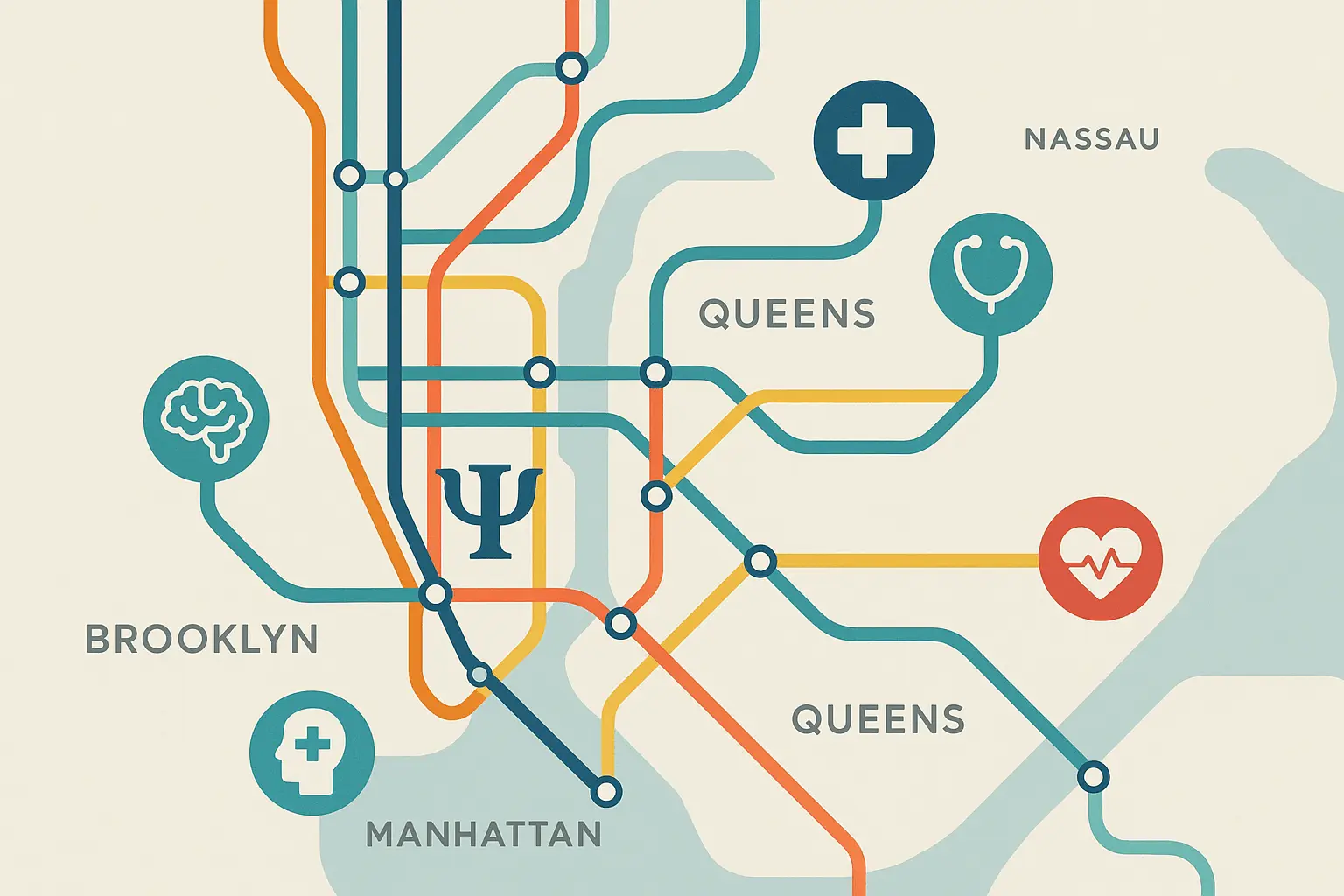
Everyone wants the Manhattan internship at some prestigious hospital, but you're missing incredible opportunities if you don't consider the outer boroughs. Brooklyn's community health centers are doing innovative work with immigrant populations. Queens offers linguistic diversity that's unmatched anywhere else. The Bronx provides some of the most challenging and rewarding community mental health experiences you can find.
Transportation actually matters way more than most students realize. A Brooklyn internship might mean a 20-minute subway ride instead of an hour-long schlep to Manhattan. That extra time really adds up over a summer program, affecting your quality of life and your ability to actually engage with the experience.
The Bronx offers particularly valuable experiences if you're interested in community psychology. You'll work with populations facing complex trauma, systemic oppression, and serious resource scarcity. These experiences develop resilience and clinical skills that'll serve you throughout your career while contributing to actual social change.
Building Your Competitive Edge from Day One
Starting your internship prep as a senior? That's a recipe for disappointment. NYC's psychology internship market demands candidates who've been building their credentials systematically from freshman year. The students who land the most competitive positions get that every course, volunteer opportunity, and research project contributes to their overall profile.
Academic Excellence: It's More Than Just Good Grades
That 3.5 GPA minimum isn't negotiable at most competitive sites - it's a hard cutoff that eliminates you before anyone even reads your application. But here's what they don't tell you: the difference between a 3.5 and a 3.8 candidate often comes down to smart course selection rather than just being naturally brilliant.
Abnormal psychology, research methods, and statistics form the foundation of everything you'll do as an intern. When you're sitting in a case conference discussing a client's diagnosis, you need to understand DSM-5 criteria cold. When you're contributing to research projects, you better know the difference between correlation and causation without even thinking about it.
Advanced courses in your area of interest make a huge difference in competitive applications. Interested in child psychology? Developmental psychopathology becomes essential. Want to work in neuropsychology? Cognitive psychology and biological bases of behavior move from electives to must-haves.
I know a girl Sarah, a junior psych major who strategically planned her coursework around trauma therapy. She took abnormal psych as a sophomore, did a summer research methods course, then enrolled in advanced courses in PTSD and trauma-informed care during junior year. When she applied to internships at NYC trauma centers, her transcript told a coherent story about her specialized preparation, which totally set her apart from candidates with generic psychology coursework.
Experience That Actually Matters
Volunteer work at crisis hotlines teaches you skills no classroom can replicate: staying calm during crises, listening without judgment, and assessing suicide risk. These aren't theoretical concepts anymore - they're life-and-death skills that show your commitment to the field.
Research assistant positions prove you can handle the methodical, sometimes boring work that drives psychological science forward. You'll learn to manage data precisely, follow protocols exactly, and understand how research translates into clinical practice. This experience becomes particularly valuable when applying to research-focused internships.
Peer counseling or RA roles show you can support others while maintaining appropriate boundaries. These experiences prove to internship supervisors that you understand the helping relationship and can handle the emotional demands of psychological work without getting overwhelmed.
Programs often require specific educational backgrounds, with many requiring students to be "pursuing a Bachelor's degree in psychology or a related mental health field" and preferring "coursework in psychology and research methods or statistics." This emphasis on foundational knowledge shows how important strategic academic planning is from early in college.
Professional Skills That Actually Set You Apart
Learning SPSS or R before your internship starts makes you immediately valuable to research teams. While other interns are struggling with basic data entry, you're running analyses and creating visualizations that actually contribute to ongoing studies. This technical competency often determines whether you get routine busywork or substantive research responsibilities.
Getting familiar with electronic health record systems, even through online tutorials, shows you understand modern healthcare delivery. When you can navigate Epic or Cerner without extensive training, supervisors see you as an asset rather than someone who's going to require a ton of time investment.
Crisis intervention training through organizations like QPR (Question, Persuade, Refer) or Mental Health First Aid provides concrete skills that internship sites value immediately. These certifications show your commitment to safety and professional development while giving you practical tools you'll use regularly.

Marcus, a psych major at Hunter, spent his sophomore summer doing online Mental Health First Aid training and learning basic SPSS through YouTube tutorials. When he applied to research internships, he could demonstrate both crisis intervention skills and data analysis capabilities. This combination made him attractive to both clinical and research sites, ultimately leading to his acceptance at a competitive NYU research program where he contributed to data analysis from day one.
Mastering the Application Game
Your application materials are your first impression, elevator pitch, and demonstration of why you belong at each specific internship site all rolled into one. Generic applications get generic rejections, while targeted materials that connect your experiences to their mission significantly improve your chances of actually standing out.
Crafting a Psychology-Focused Resume That Gets Noticed
Your resume needs to tell a coherent story about your journey toward becoming a psychologist. Start with your most relevant experience and work backward, showing how each role built on the previous one to develop your clinical or research skills.
Quantify everything you possibly can. Instead of "helped with research," write "assisted with data collection for longitudinal study involving 200+ participants." Instead of "volunteered at crisis center," try "provided crisis support to 15-20 callers per shift over 6-month period." These specific details demonstrate the scope of your experience and show you pay attention to professional documentation.
Include specific coursework that relates directly to the internship. Applying to a child psychology program? List your developmental psychology, child psychopathology, and family therapy courses prominently. Research position? Highlight your statistics, research methods, and any advanced methodology courses that show your analytical capabilities.
Technical skills deserve their own section because they often determine how immediately useful you are to the organization. List software proficiency (SPSS, R, Excel), any electronic health record experience, and relevant certifications. These concrete skills frequently tip the scales between otherwise similar candidates.
|
Application Component |
Clinical Focus |
Research Focus |
Community Mental Health |
|---|---|---|---|
|
Key Coursework |
Abnormal Psychology, Clinical Assessment |
Research Methods, Statistics, Experimental Design |
Social Psychology, Multicultural Psychology |
|
Essential Experience |
Crisis hotline, hospital volunteering |
Research assistant, data analysis |
Community service, advocacy work |
|
Technical Skills |
EHR systems, crisis intervention |
SPSS/R, literature review |
Cultural competency, bilingual abilities |
|
Certifications |
Mental Health First Aid, CPR |
IRB training, research ethics |
Diversity training, peer counseling |
Personal Statements That Actually Connect and Convince
Your personal statement isn't about why you want to be a psychologist - it's about why you want to be a psychologist at their specific organization. Research their mission, recent initiatives, and current programs thoroughly. Then connect your experiences and goals directly to their work in concrete, specific ways.
Start with a specific moment that sparked your interest in their particular focus area. Maybe volunteering with homeless youth drew you to The Door, or watching a family member struggle with mental illness connects you to community mental health work. These personal connections show authentic motivation rather than generic interest in psychology.
Show you know their current work by mentioning specific programs, recent research publications, or community initiatives. This proves you've actually invested time in understanding their organization and aren't just mass-applying to every internship in the city. Supervisors definitely notice when applicants reference their recent work.
End with concrete contributions you can make immediately. Don't just express eagerness to learn - explain how your Spanish fluency could support their Latino outreach program, or how your research experience could contribute to their ongoing studies. Specific contributions show you're thinking about their needs, not just your own learning goals.
Application Strategy: Quality Beats Quantity Every Time
Applying to 30 internships might seem strategic, but it's actually counterproductive. You can't possibly research and tailor applications to that many programs effectively. Instead, identify 8-12 programs that genuinely align with your interests and career goals, then invest serious time in crafting targeted applications for each.
Create a detailed spreadsheet tracking application deadlines, requirements, and key contacts. Some programs want three references, others want two. Some require transcripts, others don't. Missing these seemingly minor details can disqualify an otherwise strong application before anyone even evaluates your qualifications.
Follow up strategically and professionally. If you haven't heard back within their stated timeline, one polite email inquiry is appropriate and shows continued interest. More than that becomes annoying rather than persistent, potentially hurting your chances with that organization and others in their network.
Jennifer focused her applications on 10 carefully selected programs that matched her interest in adolescent mental health. She researched each organization's teen programs, mentioned specific initiatives in her personal statements, and tailored her resume to highlight her experience with youth populations. This targeted approach resulted in interviews at 7 of the 10 programs, compared to her roommate who applied broadly to 25 programs and only got 2 interview invitations.
Networking Your Way to Hidden Opportunities
The best internships in NYC aren't always posted on job boards. They're filled through professional networks, faculty connections, and relationships built over time. Your networking strategy might actually matter more than your GPA when it comes to accessing truly exceptional opportunities.
Professional Organizations: Your Gateway to the Inner Circle
The New York State Psychological Association (NYSPA) student membership costs less than a textbook but gives you access to monthly meetings where you'll meet practicing psychologists, internship supervisors, and potential mentors. These aren't just networking events - they're professional development opportunities where you learn about current issues affecting the field.
APA division memberships connect you with professionals in your specific areas of interest. Division 12 (Clinical Psychology) hosts events focused on evidence-based practice. Division 35 (Society for the Psychology of Women) addresses gender issues in mental health . Choose divisions that align with your career goals and actually show up to their events regularly.
The job boards these organizations maintain often list opportunities weeks before they appear elsewhere. You'll see internship postings, research assistant positions, and even full-time opportunities that never make it to general job sites. This early access can give you a significant advantage in competitive application processes.
Faculty Connections: Your Academic Advantage
Your professors aren't just teachers - they're practicing psychologists, researchers, and consultants with extensive professional networks. The professor teaching your abnormal psychology course might supervise interns at Bellevue Hospital or collaborate with researchers at Mount Sinai.
Building these relationships requires genuine interest and consistent engagement. Go to office hours when you want to discuss course material in greater depth, not just when you're struggling. Ask about their research, career path, and current projects in the field. This authentic curiosity often leads to meaningful mentoring relationships.
Research opportunities with faculty provide the closest mentoring relationships available. Working on a professor's research project gives you regular one-on-one time, insight into their professional network, and often leads to conference presentations or publication opportunities that seriously strengthen your graduate school applications.
Alumni Networks: Your Professional Family Tree
Your university's alumni network includes psychologists working throughout NYC's mental health system. These professionals understand your educational background, know your professors, and often remember what it was like to search for internships themselves.
LinkedIn makes finding these connections easier than ever. Search for alumni working at organizations where you'd like to intern. Send personalized messages mentioning your shared educational background and requesting brief informational interviews. Most alumni are surprisingly willing to help fellow graduates.
Alumni connections often provide insider knowledge about application processes, workplace culture, and upcoming opportunities that you can't get anywhere else. They understand the challenges you're facing and genuinely want to support the next generation of psychologists from their alma mater.
Informational Interviews: Your Secret Weapon
Informational interviews aren't job interviews - they're conversations about someone's career path and professional experiences. This lower-pressure format allows for more genuine relationship building and often provides insights you can't get through formal channels.
Prepare thoughtful questions about their daily responsibilities, career trajectory, and advice for aspiring psychologists. Ask about challenges in their field, recent changes in their organization, and what they wish they'd known when starting their career. These conversations provide valuable industry insights while building professional relationships.
Follow-up is crucial but often overlooked. Send a thank-you email within 24 hours, mentioning specific insights from your conversation. Then maintain the relationship with periodic updates on your academic progress or relevant articles you think they'd find interesting.
These conversations often lead to advance notice when internship positions open up. The professional you interviewed might email you directly when their organization starts recruiting, giving you a huge advantage over other applicants who only learn about opportunities through public postings.

Acing the Interview Process
Psychology internship interviews in NYC involve specialized formats that require targeted preparation beyond standard interview techniques. Success depends on understanding different interview styles, preparing for psychology-specific questions, and demonstrating both theoretical knowledge and practical judgment.
Understanding Different Interview Formats
Panel interviews at major medical centers can feel pretty intimidating - you're facing 3-5 professionals who might include psychologists, psychiatrists, social workers, and program directors. Each person is evaluating different aspects of your candidacy, from clinical knowledge to whether you'd fit well with their team.
Research-focused interviews often require presenting a previous project or discussing how you'd approach a hypothetical research question. You might need to explain statistical concepts, discuss ethical considerations in research, or demonstrate knowledge of current literature in your area of interest.
Community organization interviews tend to be more conversational, but don't mistake informal for easy. These supervisors want to see your passion for social justice, cultural humility, and ability to work effectively with underserved populations.
Clinical Interview Scenarios: Thinking on Your Feet
Role-playing exercises might put you in the position of conducting an intake interview with a mock client presenting with depression, anxiety, or trauma symptoms. You're not expected to provide therapy - you're showing basic helping skills and clinical judgment under pressure.
Active listening becomes crucial during these exercises. Maintain appropriate eye contact, use reflective listening techniques, and ask open-ended questions that encourage the "client" to share more information. Don't try to give advice or solve their problems immediately - focus on understanding and assessment.
Crisis assessment scenarios test your ability to evaluate suicide risk, determine appropriate levels of care, and know when to involve supervisors or emergency services. Review basic risk factors and protective factors before your interview, and don't hesitate to acknowledge when you'd seek supervision.
Ethical boundary questions are common and important. You might be asked how you'd handle a client who wants to be friends on social media, or what you'd do if you ran into a client at a social event. These questions assess your understanding of professional boundaries and dual relationships.
Many internship programs involve substantial time commitments that test your ability to balance responsibilities, with some requiring "10 hours over two days per week" while maintaining academic performance and other commitments. Be ready to discuss how you'll manage these competing demands.
Research Presentation Requirements
If you're interviewing for research positions, prepare a 10-15 minute presentation about a project you've worked on. Focus on the research question, methodology, key findings, and implications rather than getting lost in statistical details that might confuse your audience.
Practice explaining complex concepts in simple terms. Your audience might include professionals from different disciplines who aren't familiar with your specific research area. Can you explain your study's significance to someone outside psychology? This skill shows your ability to communicate effectively across disciplines.
Prepare for questions about limitations, alternative explanations for your findings, and future research directions. These questions test your critical thinking skills and understanding of the research process beyond just executing assigned tasks.
NYC-Specific Knowledge That Impresses
Research ThriveNYC and other city mental health initiatives before your interviews. Understanding these programs shows you're thinking about how your internship fits into broader mental health efforts in the city rather than just focusing on your own learning goals.
Cultural competency questions are inevitable given NYC's diversity. Be prepared to discuss how you'd work with clients from different cultural backgrounds, language barriers you might encounter, and your approach to addressing health disparities in urban populations.
Technology familiarity matters more than ever in modern healthcare settings. Mention any experience with teletherapy platforms, electronic health records, or digital mental health tools. The pandemic really accelerated adoption of these technologies throughout NYC's mental health system.
Post-Interview Strategy
Send personalized thank-you emails within 24 hours to each person who interviewed you. Reference specific aspects of your conversation and reiterate your interest in their particular programs or research areas. This attention to detail demonstrates professionalism and genuine engagement.
If you interviewed with multiple people, vary your thank-you messages. Don't send identical emails to everyone - personalize each one based on your specific conversation with that individual. This shows you were paying attention and value each person's unique perspective.
Follow-up timing matters in healthcare settings. If they said they'd make decisions within two weeks, wait at least that long before sending a polite inquiry about your status. One follow-up email after their stated timeline is professional; multiple emails become annoying and potentially damaging.

Making It Work: Practical Survival Guide
Landing the internship is just the beginning. Making it work financially and logistically in one of the world's most expensive cities requires serious planning and creative problem-solving that most students totally underestimate.
Financial Reality Check
Most psychology internships don't pay, and the ones that do offer stipends that barely cover your MetroCard. You're looking at 10-12 weeks of full-time work with minimal or no compensation in one of the most expensive cities in the world. This reality requires honest financial planning from the start.
Let's be real about your total costs. Housing for the summer might run $1,200-2,000 per month depending on location and arrangements. Add transportation ($130/month for unlimited MetroCard), food, and random expenses, and you're looking at $4,000-6,000 for a summer internship experience. Yeah, it's a lot.
Explore funding options early and thoroughly. Some universities offer internship grants or let you use financial aid for summer experiences. Psychology honor societies sometimes provide small grants for professional development. Research assistant positions at major medical centers occasionally offer modest compensation that can offset some expenses.
Consider part-time work that complements your internship goals. Evening or weekend positions in mental health-related fields (crisis hotlines, residential facilities) can provide income while building relevant experience that strengthens your professional development.
Housing Solutions That Actually Work
Summer sublets from college students offer the most affordable option, typically running $800-1,500 per month depending on location and amenities. Start searching in March for summer positions - the best deals disappear quickly as other students lock in their arrangements.
University housing programs sometimes extend to summer interns, even from other schools. NYU, Columbia, and other institutions occasionally have space available for visiting students or interns, though these opportunities are limited and competitive.
For students pursuing competitive psychology internships in NYC, housing often becomes the deciding factor between accepting an opportunity and having to decline due to logistical constraints. Specialized student housing services address this critical barrier by offering flexible, furnished accommodations strategically located near major hospitals, universities, and mental health facilities throughout the city.
Consider locations like Upper Manhattan or Lexington Avenue area that provide easy access to major medical centers while offering more affordable rates than prime Manhattan locations. Their lease terms align perfectly with typical internship durations, while proximity to public transportation lets you focus on professional development rather than lengthy commutes.

Think seriously about outer borough options. A place in Brooklyn or Queens might add 20-30 minutes to your commute but could save you $500+ per month. That extra commute time becomes totally worthwhile when it makes the internship financially feasible rather than impossible.
Understanding how these specialized housing arrangements work can transform potentially prohibitive internships into accessible stepping stones toward your psychology career. The convenience and cost-effectiveness often outweigh the premium compared to traditional apartment hunting in an unfamiliar city.
Maximizing Your Professional Development
Set specific learning goals with your supervisor during your first week. Don't just say you want to "gain experience" - identify particular skills you want to develop, populations you want to work with, or research techniques you want to learn. This specificity helps supervisors tailor your experience to your professional goals.
Seek out diverse experiences within your placement whenever possible. If you're at a hospital, ask to observe different departments. Community mental health interns might request exposure to various programs or client populations. Research interns should try to participate in different aspects of the research process beyond their assigned tasks.
Attend every training, workshop, and case conference you're allowed to join. These experiences provide learning opportunities beyond your direct responsibilities and help you understand how your role fits into the broader organization's mission and operations.
Document everything for future applications and professional development. Keep detailed records of clients you've worked with (maintaining confidentiality), research projects you've contributed to, skills you've developed, and training you've received. This documentation becomes invaluable for graduate school applications or future job searches.
Build relationships beyond your direct supervisor throughout the organization. Connect with other interns, staff members, and professionals in different departments. These relationships often lead to future opportunities and provide diverse perspectives on career paths in psychology.
Professional Portfolio Building
Create a comprehensive professional portfolio documenting your internship experience. Include project summaries, skill assessments, supervisor evaluations, and reflection papers that demonstrate your growth and learning throughout the experience.
Quantify your contributions wherever possible to make your experience more compelling. How many clients did you work with? What research tasks did you complete? How many hours of training did you receive? These concrete details make your experience way more impressive to future employers or graduate programs.
Request detailed letters of recommendation before your internship ends. Supervisors remember specific details about your performance much better immediately after working with you than they will six months later when you're applying to graduate school.
Consider presenting your internship experience at undergraduate research conferences or psychology honor society meetings. These presentations show your ability to synthesize and communicate your professional experiences while building your academic portfolio.
Internship Success Checklist:
- Set specific learning goals with supervisor in first week
- Document all client interactions (maintaining confidentiality)
- Attend all available trainings and workshops
- Build relationships across the organization
- Keep detailed time logs and project records
- Request mid-internship feedback from supervisor
- Collect contact information for networking
- Schedule final evaluation meeting
- Request letters of recommendation before departure
- Update resume with specific accomplishments
Final Thoughts
The path to landing psychology internships in NYC requires strategic preparation, authentic networking, and a commitment to professional development that extends way beyond the internship period itself. The competitive nature of these opportunities means that early preparation, genuine relationship building, and targeted applications significantly improve your chances of success.
Success requires starting early, being strategic about your applications, and approaching the process with both professionalism and authenticity. The students who land the most competitive positions aren't necessarily those with perfect GPAs - they're the ones who've built relevant experience, cultivated professional relationships, and can actually articulate why they're passionate about each specific opportunity.
Remember that rejection is part of the process, even for highly qualified candidates. The competition is intense, and many factors beyond your control influence selection decisions. Use any rejections as learning opportunities to strengthen future applications, and don't let them discourage you from pursuing your goals in psychology.
The financial and logistical challenges are real, but they're not insurmountable. Creative housing solutions through services offering Manhattan locations or Heritage House, careful budgeting, and strategic planning can make even unpaid internships financially feasible. The professional development and networking opportunities you'll gain often provide returns that extend far beyond the internship period.
Most importantly, approach your internship with curiosity, professionalism, and a commitment to learning. The relationships you build, skills you develop, and experiences you gain will influence your career trajectory for years to come. NYC's psychology community is both competitive and collaborative - the professionals who seem intimidating during the application process often become mentors and advocates once you're part of their community.
The city's mental health landscape offers unparalleled opportunities for professional development, exposure to diverse populations, and networking with leaders in the field. Your internship experience here won't just add a line to your resume - it'll shape your understanding of psychology practice and open doors throughout your career in ways that smaller markets simply cannot match.